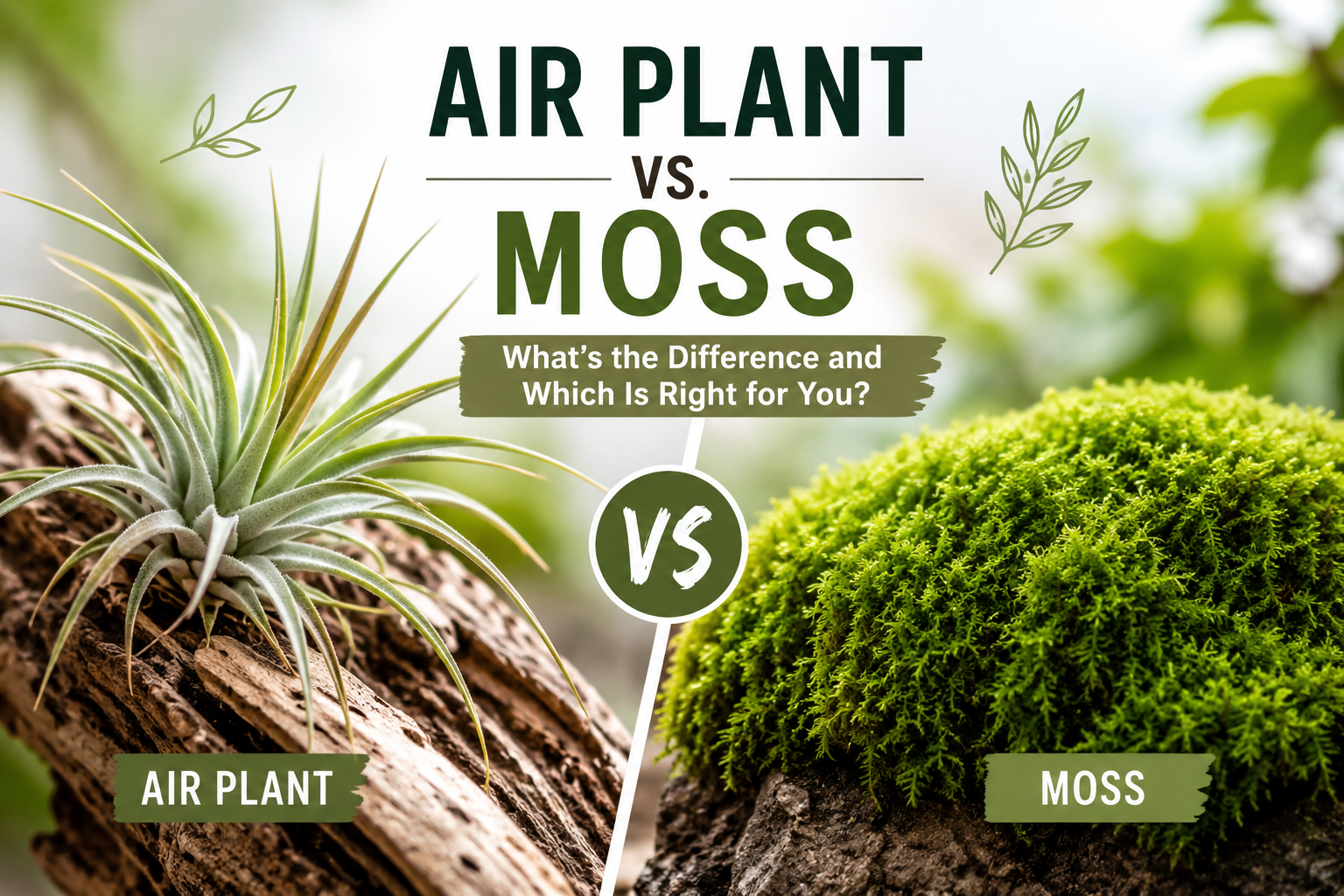
Indoor plants have become a favorite way to bring nature into homes, offices, and small apartments. Among the most popular choices are air plants and moss, both loved for their unique appearance and decorative appeal. While they may look similar in certain displays, they are completely different living organisms with distinct care requirements and growth habits.
Many beginners wonder whether they should choose an air plant or moss for their indoor garden. The answer depends on your lifestyle, decorating goals, and the amount of care you’re willing to provide.
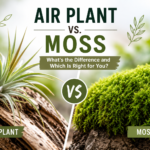
In this complete guide, we’ll compare air plants vs. moss, explain their differences, highlight their pros and cons, and help you decide which one is the better choice for your home.
What Is an Air Plant?
Air plants (Tillandsia) belong to the Bromeliad family. Unlike traditional houseplants, they don’t grow in soil. Instead, they absorb water and nutrients through tiny scales called trichomes on their leaves.
Air plants naturally grow attached to trees, rocks, fences, and even telephone wires in tropical and subtropical climates.
Key Features
- No soil required
- Absorb moisture from the air
- Need bright indirect light
- Available in hundreds of species
- Produce beautiful colorful blooms
- Create offsets known as “pups”
What Is Moss?
Moss is a small, soft, non-vascular plant that typically grows in damp, shaded environments. Unlike flowering plants, moss reproduces through spores rather than seeds.
There are thousands of moss species, including:
- Sheet Moss
- Cushion Moss
- Mood Moss
- Fern Moss
- Sphagnum Moss
Moss is widely used in terrariums, landscaping, floral arrangements, and decorative crafts.
Air Plant vs. Moss: Quick Comparison
| Feature | Air Plant | Moss |
|---|---|---|
| Scientific Group | Bromeliad | Bryophyte |
| Needs Soil | No | Usually No |
| Water Source | Air & soaking | Constant moisture |
| Sunlight | Bright indirect light | Low to medium light |
| Humidity | Moderate | High |
| Flowers | Yes | No flowers |
| Growth Speed | Slow | Moderate |
| Maintenance | Low | Medium |
| Lifespan | Many years | Long-lasting with care |
| Indoor Decoration | Excellent | Excellent |
Appearance Differences
One of the biggest differences is how they look.
Air Plants
Air plants have long, elegant leaves that grow in rosettes. Depending on the species, leaves may be:
- Silver
- Green
- Curly
- Thick
- Soft
- Spiky
Many species produce stunning pink, purple, red, or blue flowers.
Moss
Moss creates a soft, carpet-like appearance. It forms dense green cushions or mats that cover rocks, wood, and soil.
Instead of flowers, moss spreads through tiny spores.
Care Requirements Compared
Air Plant Care
Air plants are surprisingly easy to maintain.
They need:
- Bright indirect sunlight
- Weekly soaking for 20–30 minutes
- Excellent air circulation
- Occasional fertilizer
- Complete drying after watering
Too much water trapped inside the plant may cause rot.
Moss Care
Living moss has different needs.
It prefers:
- Shade or indirect light
- Constant moisture
- High humidity
- Cool temperatures
- Gentle misting
Allowing moss to dry out repeatedly may slow growth or cause browning.
Watering: Which Needs More?
Watering is where these two differ the most.
Air Plants
Water once every 7–10 days.
Methods include:
- Soaking
- Misting (supplemental)
- Quick rinsing in humid climates
After watering, always dry upside down.
Moss
Living moss prefers consistently moist conditions.
Watering usually involves:
- Daily misting (dry climates)
- Keeping the surface damp
- Avoiding complete drying
Winner for low maintenance: Air Plant
Lighting Requirements
Air Plants
Need:
- Bright indirect sunlight
- Filtered natural light
- Grow lights if indoors
Avoid intense afternoon sun.
Moss
Prefers:
- Shade
- Low light
- Diffused sunlight
Direct sunlight often dries moss too quickly.
Can Air Plants Grow on Moss?
Yes—but with a few precautions.
Many decorative displays combine air plants with moss because they look beautiful together.
However:
- Moss should not permanently cover the air plant’s base.
- Air circulation is essential.
- Constant wet moss touching the plant may cause rot.
Use moss as decoration rather than as a planting medium.
Decorative Uses
Air plants are ideal for:
- Hanging displays
- Glass globes
- Driftwood
- Wall art
- Magnetic planters
- Wedding centerpieces
Moss works well for:
- Terrariums
- Fairy gardens
- Floral arrangements
- Bonsai displays
- Wreaths
- Ground cover
Combining both creates stunning natural arrangements.
Which Is Easier for Beginners?
If you’re new to indoor gardening, air plants are generally the easier choice.
Choose Air Plants If You Want:
- Less watering
- Modern home décor
- Colorful blooms
- Easy maintenance
- Unique varieties
Choose Moss If You Want:
- Terrarium projects
- Natural landscapes
- High-humidity displays
- Fairy gardens
- Soft green textures
Pros and Cons
Air Plant
Pros
- No soil required
- Unique appearance
- Beautiful flowers
- Low maintenance
- Hundreds of varieties
- Great for small spaces
Cons
- Can rot if overwatered
- Needs airflow
- Doesn’t tolerate standing water
Moss
Pros
- Soft natural appearance
- Excellent for terrariums
- Improves humidity
- Affordable
- Easy to shape
cons
- Requires frequent moisture
- Doesn’t produce flowers
- Sensitive to drying out
Common Myths
Myth 1: Air Plants Live Only on Air
False.
They still need water and nutrients.
Myth 2: Moss Is Fake Decoration
False.
Living moss is a real plant that requires proper care.
Myth 3: Air Plants Need Soil Eventually
False.
Healthy air plants never require soil.
Frequently Asked Questions
Is moss better than air plants?
Neither is better—it depends on your needs. Air plants require less maintenance, while moss creates lush green landscapes.
Can air plants sit directly on moss?
Yes, but avoid keeping the base constantly wet.
Do air plants absorb nutrients from moss?
No. Air plants absorb moisture and nutrients through their leaves.
Does moss need sunlight?
Yes, but indirect light is best.
Which lives longer?
Both can live for many years with proper care.
Final Verdict
When comparing air plants vs. moss, there isn’t a single winner. Both offer unique beauty and serve different purposes in indoor gardening.
If you prefer a low-maintenance, modern houseplant, an air plant is the better choice. It doesn’t require soil, produces beautiful blooms, and thrives with minimal care.
If you’re creating terrariums, fairy gardens, bonsai displays, or lush green landscapes, living moss is an excellent option that adds rich texture and natural charm.
For the best of both worlds, combine air plants with decorative moss in a well-ventilated arrangement. You’ll enjoy a stunning display that highlights the beauty of each while meeting their individual care needs.