Air plants (Tillandsia) have become one of the most popular houseplants because they don’t require soil and can be displayed in creative ways. However, many people assume these unique plants are “maintenance-free.” While air plants are relatively easy to care for, they still need the right balance of water, light, airflow, and humidity. Even experienced plant lovers can make simple mistakes that lead to brown leaves, rot, poor growth, or even plant death.
The good news is that most air plant problems are preventable. By understanding what your Tillandsia needs and avoiding common care errors, you can enjoy healthy, vibrant plants for years. In this guide, we’ll explore the most common air plant mistakes and provide practical solutions to help your plants thrive.
Why Proper Air Plant Care Matters
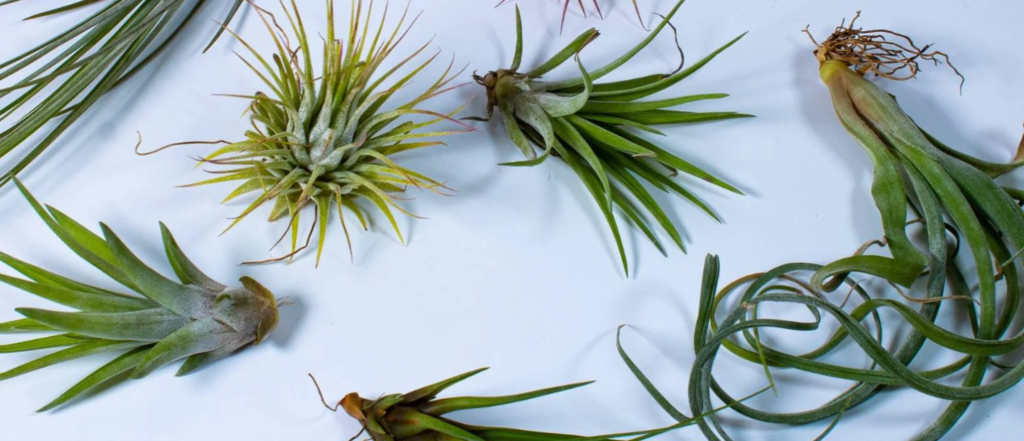
Unlike traditional houseplants, air plants absorb moisture and nutrients through specialized structures called trichomes on their leaves. Because they don’t grow in soil, every aspect of their care—watering, lighting, airflow, and humidity—plays a vital role in their health.
Learning the correct care routine helps your air plants:
- Stay green and vibrant
- Grow faster
- Produce beautiful flowers
- Develop healthy pups (baby plants)
- Live for many years
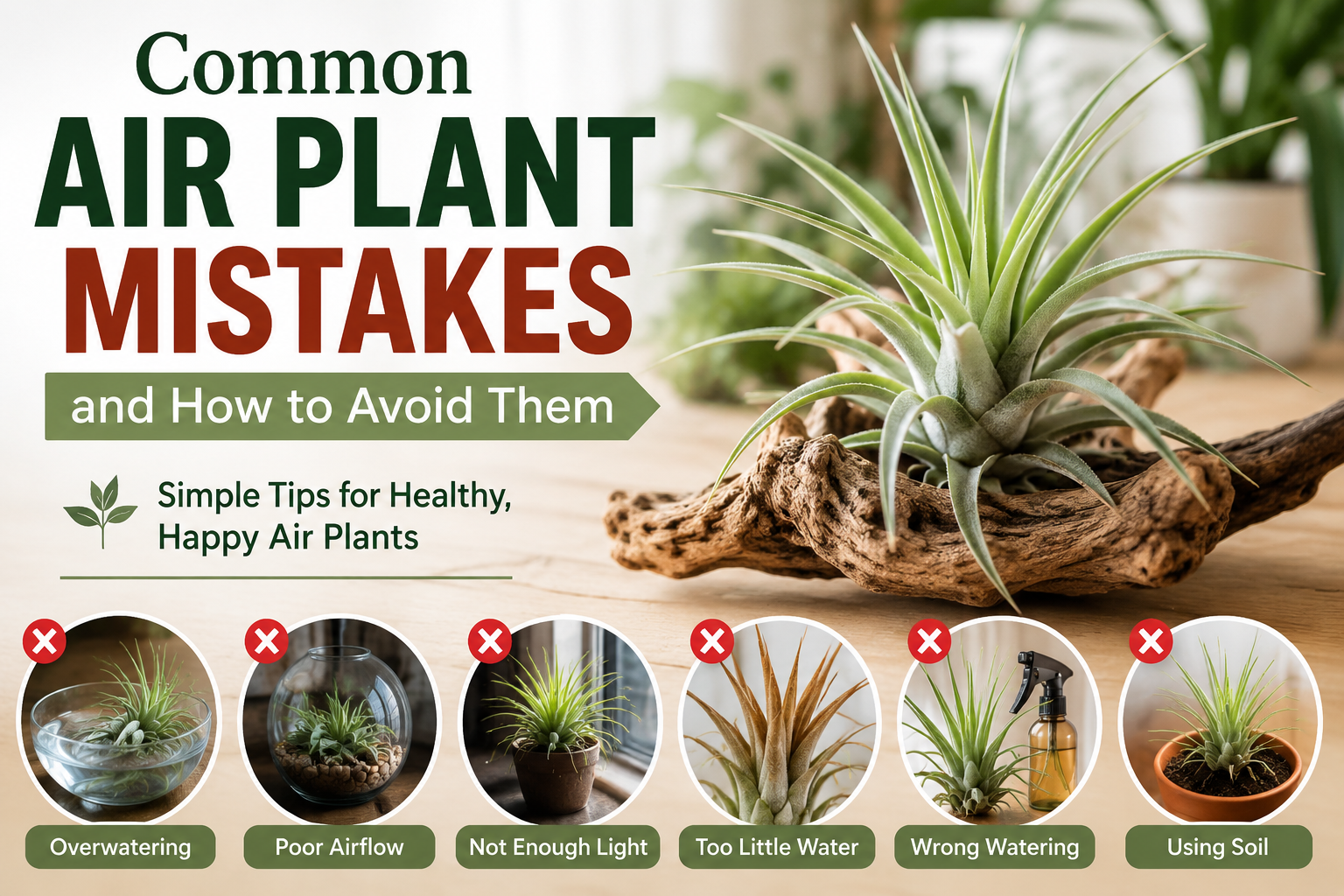
1. Watering Too Little
One of the biggest misconceptions is that air plants only need occasional misting.
Signs
- Curled leaves
- Crispy brown tips
- Dry appearance
- Slow growth
How to Avoid It
Instead of relying only on misting, soak your air plants in room-temperature water for 20–30 minutes once a week. In hot or dry climates, you may need to water them twice a week.
Always let them dry completely before placing them back in their display.
2. Overwatering Your Air Plant
Although underwatering is common, overwatering is even more dangerous.
If water becomes trapped at the base of the plant, it can quickly cause rot.
Signs
- Mushy base
- Black leaves
- Foul smell
- Leaves falling off easily
How to Avoid It
- Shake off excess water after soaking.
- Turn the plant upside down for several hours.
- Ensure complete drying within 3–4 hours.
Good airflow is essential after watering.
3. Not Providing Enough Bright Light
Air plants love bright light but dislike prolonged harsh sunlight.
Signs
- Pale leaves
- Weak growth
- No flowering
- Dull color
Best Lighting
Place your air plants near:
- East-facing windows
- Bright north-facing windows
- Filtered sunlight
- Bright indirect light
If natural light is limited, use full-spectrum LED grow lights.
4. Leaving Air Plants in Dark Rooms
Bathrooms and shelves often look beautiful with air plants, but they may not receive enough light.
Avoid placing them in:
- Windowless bathrooms
- Dark offices
- Cabinets
- Dim hallways
Move them somewhere brighter for several hours each day if necessary.
5. Poor Air Circulation
Despite their name, air plants truly depend on moving air.
Without proper ventilation, moisture remains trapped and encourages fungal diseases.
Improve Airflow By
- Keeping windows open occasionally
- Using ceiling fans
- Avoiding enclosed glass containers
- Leaving space around each plant
6. Displaying Air Plants in Closed Terrariums
Closed terrariums may look attractive, but they often trap moisture.
Instead, choose:
- Open glass globes
- Wire holders
- Driftwood displays
- Hanging planters
- Wooden frames
Open displays allow better airflow and healthier growth.
7. Using Softened Water
Many homes use water softeners that add sodium to tap water.
Too much sodium damages air plants over time.
Better Water Choices
- Rainwater
- Filtered water
- Spring water
- Distilled water (occasionally)
Avoid heavily chlorinated water whenever possible.
8. Skipping Fertilizer Completely
Although air plants survive without fertilizer, they grow much better with occasional feeding.
Use an air plant fertilizer or bromeliad fertilizer once a month during the growing season.
Benefits include:
- Faster growth
- Stronger roots
- Better flowering
- Healthier pups
Do not over-fertilize.
9. Ignoring Humidity Levels
Air plants naturally grow in humid forests.
Indoor heating and air conditioning often reduce humidity significantly.
Increase Humidity By
- Grouping plants together
- Using a humidifier
- Misting between soakings
- Keeping them in naturally humid rooms with adequate light
Aim for 50–70% humidity whenever possible.
10. Leaving Dead Leaves Attached
Older leaves naturally dry over time.
Leaving excessive dead foliage may trap moisture and pests.
Regularly remove completely dry leaves by gently pulling them away.
Never remove healthy green leaves.
11. Touching the Leaves Too Often
The silvery coating on many air plants consists of tiny trichomes.
Frequent handling damages these structures.
Handle your air plants only when watering or cleaning.
12. Expecting Constant Flowers
Many beginners believe air plants bloom every year.
In reality:
- Most air plants flower only once.
- After blooming, they produce pups.
- The parent plant slowly declines while the pups mature.
This is a completely natural life cycle.
Signs Your Air Plant Is Healthy
A healthy Tillandsia usually has:
- Firm leaves
- Bright green or silvery color
- Strong structure
- New leaf growth
- Healthy pups after flowering
Minor curling before watering is normal.
Quick Air Plant Care Checklist
| Care Factor | Recommendation |
|---|---|
| Watering | Soak weekly for 20–30 minutes |
| Drying | Dry upside down within 3–4 hours |
| Light | Bright indirect sunlight |
| Humidity | 50–70% |
| Airflow | Excellent ventilation |
| Fertilizer | Once monthly during growing season |
| Display | Open containers or holders |
Frequently Asked Questions
Why are my air plant leaves turning brown?
Brown leaves are usually caused by underwatering, low humidity, excessive direct sunlight, or natural aging of older leaves.
Can air plants survive without watering?
No. Although they absorb moisture from the air, they still require regular watering through soaking or misting, depending on your environment.
How often should I soak an air plant?
Most air plants should be soaked once a week for 20–30 minutes. Hot, dry climates may require more frequent watering.
Can air plants recover from overwatering?
If rot has not spread throughout the plant, improving airflow and reducing watering may help it recover. Severe rot is often irreversible.
Do air plants need fertilizer?
They don’t require fertilizer to survive, but monthly feeding with an air plant or bromeliad fertilizer promotes stronger growth and flowering.
Final Thoughts
Air plants are among the easiest and most rewarding houseplants when their basic needs are met. Most problems stem from simple care mistakes, such as improper watering, poor lighting, or inadequate airflow. By understanding how Tillandsia naturally grows and making a few adjustments to your routine, you can avoid these common issues and enjoy healthy, thriving plants year-round.
Whether you’re new to air plants or have cared for them for years, focusing on the fundamentals—balanced watering, bright indirect light, good ventilation, and proper humidity—will make all the difference.