Mealybugs are one of the most common and frustrating pests that plant owners encounter. These tiny, soft-bodied insects can quickly infest houseplants, outdoor plants, succulents, and tropical plants, causing significant damage if left untreated. Their white, cotton-like appearance makes them easy to identify, but eliminating them completely often requires patience and consistent treatment.
In this guide, we’ll explain how to identify mealybugs, understand the damage they cause, and learn the most effective ways to get rid of them naturally and prevent future infestations.
What Are Mealybugs?
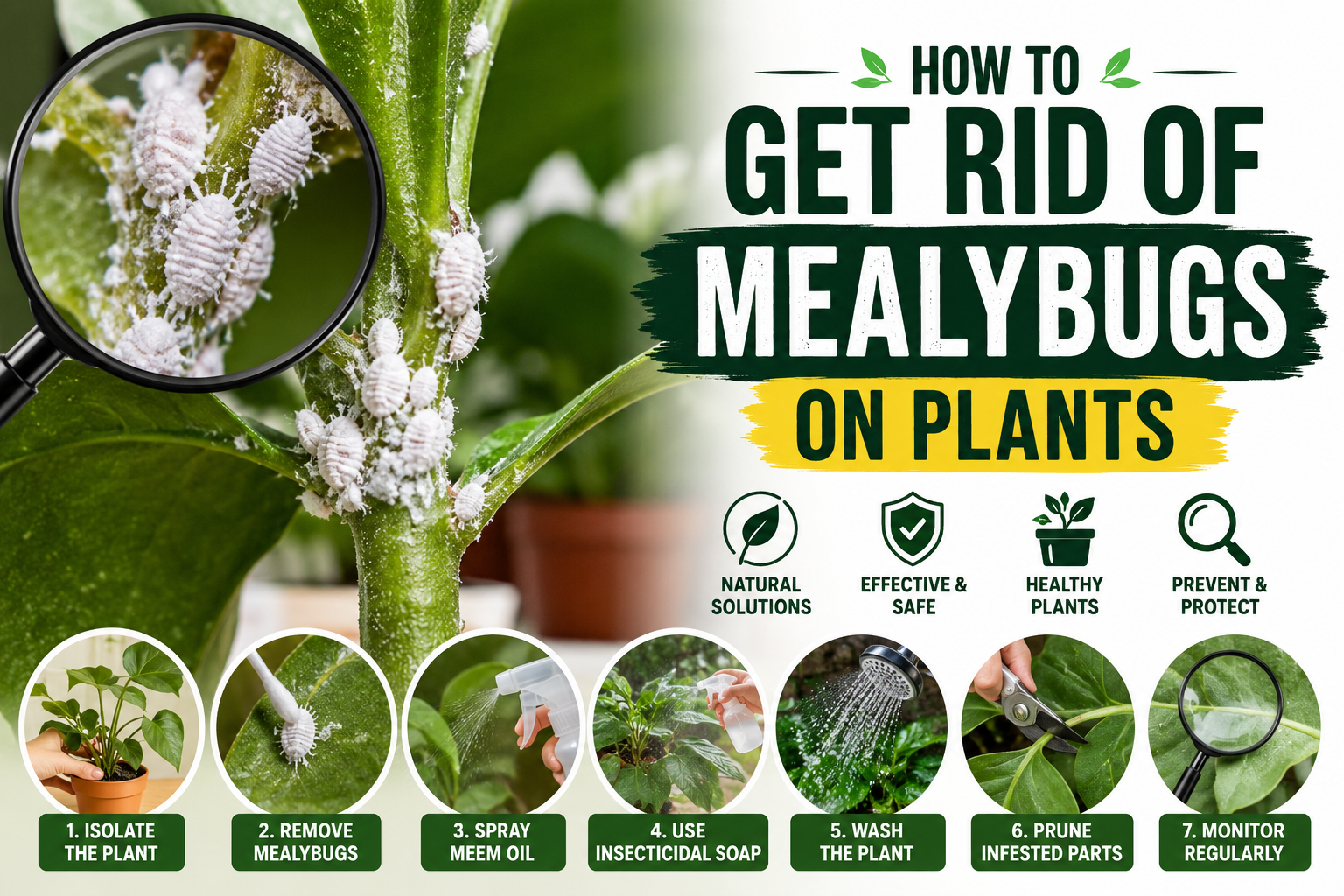
Mealybugs are small sap-sucking insects belonging to the Pseudococcidae family. They are covered with a white, waxy coating that gives them a cottony appearance. These pests feed on plant juices by piercing leaves, stems, and roots.
Mealybugs commonly attack:
- Houseplants
- Succulents and cacti
- Orchids
- Tropical plants
- Herbs and vegetables
- Outdoor ornamental plants
Because they reproduce rapidly, a small infestation can become a major problem within a few weeks.
Signs of a Mealybug Infestation
Early detection is crucial for successful treatment. Watch for these common signs:
White Cotton-Like Clusters
The most obvious sign is the appearance of white, fluffy masses on leaves, stems, and leaf joints.
Yellowing Leaves
Plants infested with mealybugs often develop yellow or discolored leaves as the pests drain nutrients from the plant.
Sticky Residue (Honeydew)
Mealybugs secrete a sticky substance called honeydew, which can attract ants and promote the growth of black sooty mold.
Stunted Growth
Plants may stop growing or develop deformed leaves and stems due to nutrient loss.
Leaf Drop
Severe infestations can cause leaves to wilt and fall prematurely.
What Causes Mealybugs?
Several factors can increase the risk of mealybug infestations:
- Bringing home infected plants
- Poor air circulation
- Over-fertilization
- Warm indoor environments
- Lack of regular plant inspections
Mealybugs can spread easily from one plant to another, especially when plants are grouped closely together.
How to Get Rid of Mealybugs on Plants
1. Isolate the Infested Plant
As soon as you notice mealybugs, separate the affected plant from healthy plants. This prevents the infestation from spreading.
2. Remove Mealybugs by Hand
For small infestations, manually remove visible mealybugs using:
- Cotton swabs
- Soft cloth
- Tweezers
Dip a cotton swab in rubbing alcohol and gently dab the insects. The alcohol dissolves their protective coating and kills them instantly.
3. Spray With Rubbing Alcohol
Mix:
- 1 part 70% isopropyl alcohol
- 1 part water
Spray the solution directly on affected areas. Always test a small section of the plant first to ensure it doesn’t damage sensitive leaves.
4. Use Neem Oil
Neem oil is one of the most effective natural remedies for mealybugs.
Benefits include:
- Kills mealybugs at various life stages
- Prevents eggs from hatching
- Repels future infestations
Mix according to the manufacturer’s instructions and spray thoroughly on leaves, stems, and hidden crevices.
5. Apply Insecticidal Soap
Insecticidal soap works by disrupting the insects‘ outer membranes.
For best results:
- Spray all plant surfaces
- Repeat every 7–10 days
- Continue treatment until no pests remain
6. Wash the Plant
A strong stream of water can remove many mealybugs from leaves and stems.
This method works particularly well for:
- Outdoor plants
- Large houseplants
- Early infestations
Allow the plant to dry completely after washing.
7. Prune Severely Infested Areas
If certain branches or leaves are heavily infested, prune and dispose of them immediately.
Never compost infested plant material, as pests can survive and spread.
Natural Home Remedies for Mealybugs
Garlic Spray
Blend garlic with water and strain the mixture before spraying affected plants.
Soap and Water Solution
Mix a few drops of mild liquid soap with water and spray directly onto pests.
Neem Oil and Soap Mix
Combining neem oil with mild soap increases effectiveness and helps the solution stick to leaves.
How Long Does It Take to Eliminate Mealybugs?
The treatment period depends on the severity of the infestation.
- Mild infestations: 1–2 weeks
- Moderate infestations: 3–4 weeks
- Severe infestations: 4–8 weeks
Because mealybug eggs are often hidden, repeated treatments are necessary to eliminate newly hatched insects.
How to Prevent Mealybugs
Prevention is always easier than treatment.
Inspect New Plants
Before bringing new plants home:
- Check stems and leaves carefully
- Look under leaves
- Examine soil surfaces
Quarantine New Arrivals
Keep new plants separate for at least two weeks before placing them near existing plants.
Avoid Over-Fertilizing
Excess nitrogen encourages soft growth that attracts mealybugs.
Improve Air Circulation
Proper airflow helps keep plants healthy and less attractive to pests.
Clean Plants Regularly
Wipe leaves with a damp cloth to remove dust and detect pests early.
Monitor Plants Frequently
Inspect plants weekly for signs of insects, sticky residue, or unusual growth.
Plants Most Commonly Affected by Mealybugs
Mealybugs frequently attack:
- Succulents
- Jade plants
- Snake plants
- Orchids
- Pothos
- Philodendrons
- Hoyas
- Citrus plants
- Hibiscus
- Ficus trees
Regular inspections can help catch infestations before they become severe.
Final Thoughts
Mealybugs can be persistent pests, but they can be successfully eliminated with consistent care and treatment. Rubbing alcohol, neem oil, insecticidal soap, and proper plant maintenance are highly effective methods for controlling infestations naturally.
The key is to act quickly, inspect your plants regularly, and continue treatment until every mealybug and egg has been removed. With the right approach, your plants can recover and thrive once again.
Frequently Asked Questions
Do mealybugs spread to other plants?
Yes. Mealybugs can easily move from one plant to another, especially when plants are close together.
Can mealybugs kill a plant?
Severe infestations can weaken and eventually kill a plant if left untreated.
Is neem oil effective against mealybugs?
Yes. Neem oil is one of the most effective natural treatments for mealybugs and helps prevent future infestations.
Can I use rubbing alcohol directly on mealybugs?
Yes. A cotton swab dipped in 70% isopropyl alcohol can kill mealybugs on contact.
How often should I treat a mealybug infestation?
Treat every 7–10 days until no signs of mealybugs remain.