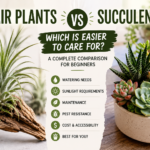
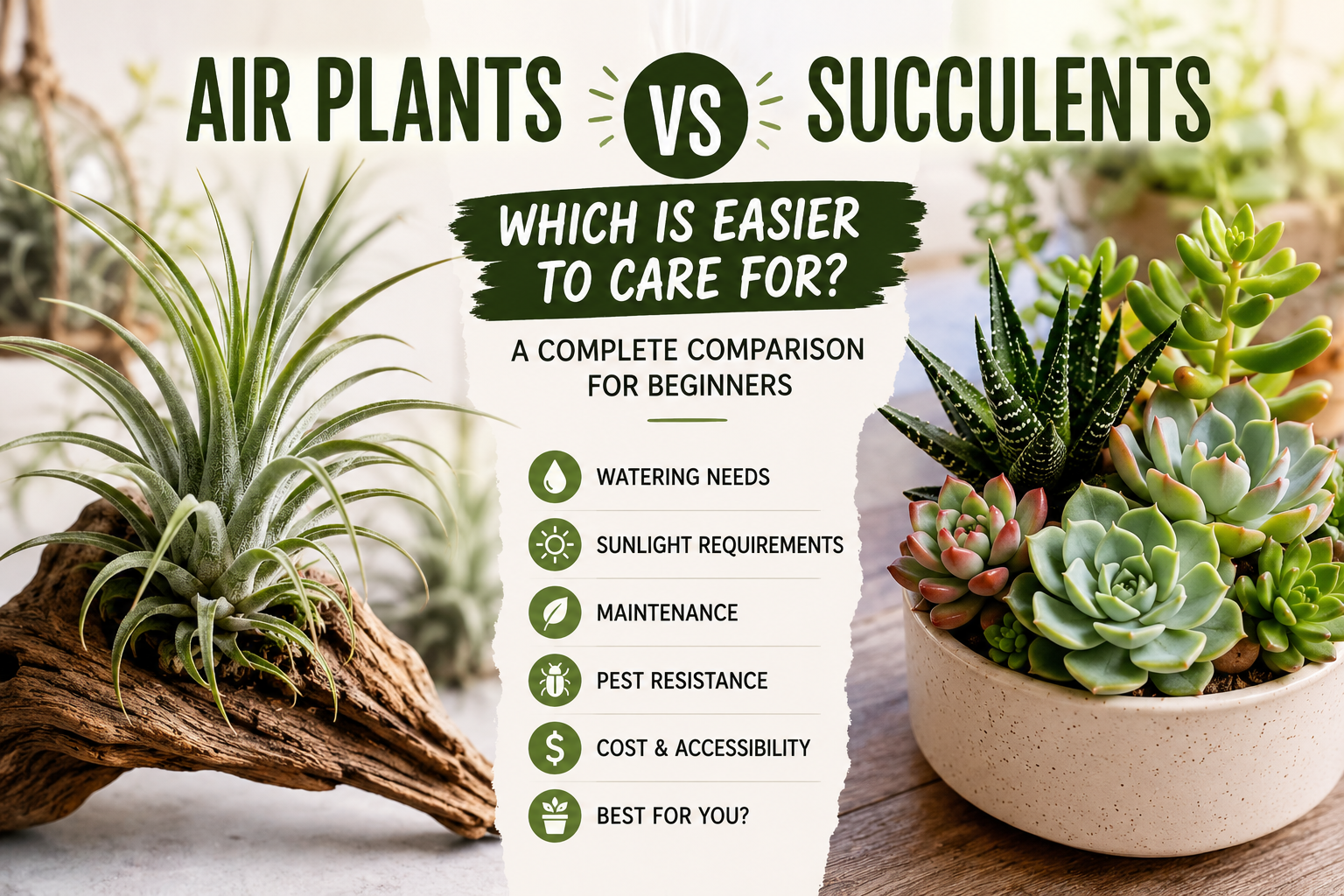
Choosing between air plants and succulents can be challenging, especially if you’re new to indoor gardening. Both are beautiful, low-maintenance plants that can brighten your home or office without demanding constant attention. However, despite their similar reputation for being easy to care for, they have very different growing requirements.
So, which is easier to care for: air plants or succulents?
The answer depends on your environment, lifestyle, and how often you remember to water your plants. In this guide, we’ll compare every important aspect—from watering and sunlight to maintenance and lifespan—so you can confidently choose the best plant for your space.
What Are Air Plants?
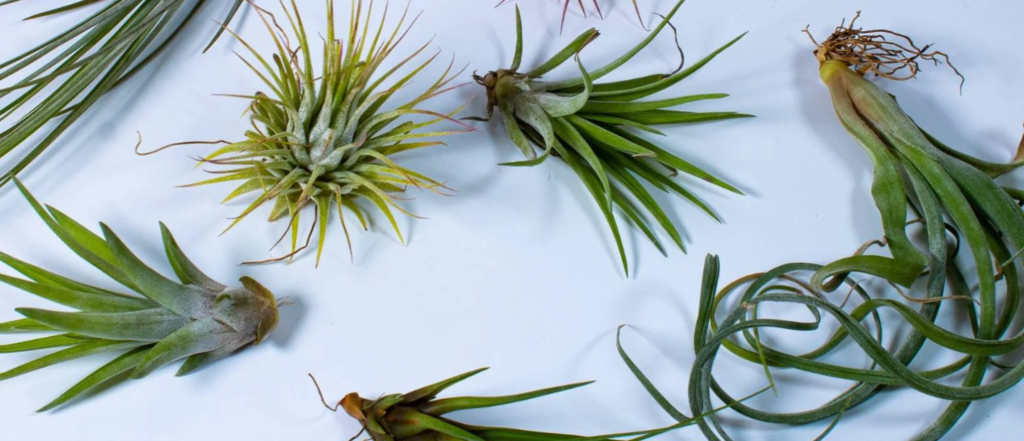
Air plants (Tillandsia) are unique plants that belong to the bromeliad family. Unlike most houseplants, they don’t grow in soil. Instead, they absorb water and nutrients through tiny scales on their leaves called trichomes.
Air plants naturally grow attached to trees, rocks, and branches in tropical and subtropical forests throughout Central and South America.
Why People Love Air Plants
- No soil required
- Unique decorative appearance
- Perfect for terrariums and wall displays
- Lightweight and compact
- Great for modern interior decoration
What Are Succulents?

Succulents are plants that store water in their thick leaves, stems, or roots. Their ability to retain moisture allows them to survive long periods without watering.
Popular succulents include:
- Aloe Vera
- Echeveria
- Jade Plant
- Haworthia
- Zebra Plant
- Sedum
Succulents are among the world’s most popular houseplants because they’re hardy, beautiful, and available in hundreds of varieties.
Air Plants vs Succulents: Quick Comparison
| Feature | Air Plants | Succulents |
| Soil Needed | No | Yes |
| Watering | Weekly soaking or misting | Every 2–3 weeks |
| Sunlight | Bright indirect light | Bright light, some direct sun |
| Humidity | Medium to high | Low humidity |
| Beginner Friendly | Yes | Yes |
| Growth Rate | Moderate | Slow |
| Decorative Options | Hanging, mounted | Pots, gardens |
| Pet Friendly | Most are safe | Depends on variety |
Watering Requirements
One of the biggest differences between air plants and succulents is how they receive water.
Air Plants
Air plants need soaking instead of traditional watering.
Generally, they require:
- Soak for 20–30 minutes once each week
- Shake off excess water
- Dry completely upside down
- Increase watering during hot weather
Poor drying is the leading cause of rot.
Succulents
Succulents prefer the “soak and dry” method.
Water only when:
- Soil is completely dry
- Leaves begin losing firmness
- Growing season requires slightly more water
Overwatering is the most common reason succulents die indoors.
Winner: Succulents
They require less frequent watering and are more forgiving if you occasionally forget.
Sunlight Requirements
Air Plants
Air plants prefer:
- Bright indirect sunlight
- East-facing windows
- Filtered natural light
Too much direct sunlight may scorch their leaves.
Succulents
Most succulents thrive in:
- Bright direct sunlight
- South-facing windows
- At least 4–6 hours of sunlight daily
Without enough light, succulents become stretched and lose their compact shape.
Winner: Air Plants (for low-light homes)
Maintenance
Air Plants
Maintenance includes:
- Weekly soaking
- Drying properly
- Occasional fertilizing
- Removing dead leaves
Succulents
Maintenance involves:
- Watering occasionally
- Repotting every few years
- Removing dead leaves
- Checking drainage
Overall, succulents require less weekly attention.
Winner: Succulents
Display Options
Air plants are extremely versatile.
You can display them in:
- Glass terrariums
- Hanging holders
- Driftwood
- Wall frames
- Seashells
- Decorative bowls
Succulents usually require containers with drainage holes.
While beautiful, they’re less flexible for creative displays.
Winner: Air Plants
Growth and Propagation
Air Plants
After blooming, air plants produce baby plants called pups.
A healthy plant usually creates:
- 2–6 pups
- Easy separation after reaching one-third the size of the parent plant
Succulents
Succulents propagate through:
- Leaf cuttings
- Stem cuttings
- Offsets
- Division
Many succulent species grow faster than air plants.
Winner: Succulents
Pest Resistance
Air plants experience very few pest problems.
Possible issues include:
- Scale insects
- Mealybugs
- Rot from trapped moisture
Succulents can attract:
- Aphids
- Mealybugs
- Fungus gnats
- Root rot
Winner: Air Plants
Cost Comparison
Air Plants
- Small varieties are generally affordable.
- Decorative holders may increase the overall cost.
Succulents
- Widely available and inexpensive.
- Decorative ceramic pots can add to the price.
Overall, both plants are budget-friendly.
Winner: Tie
Which Plant Is Better for Beginners?
If you’re new to indoor gardening, both are excellent options—but they suit different lifestyles.
Choose Air Plants if you:
- Love unique home décor
- Enjoy creative displays
- Have bright indirect light
- Don’t mind weekly soaking
Choose Succulents if you:
- Prefer minimal maintenance
- Often forget to water plants
- Have a sunny window
- Want long-lasting, hardy plants
Common Mistakes to Avoid
Air Plants
- Leaving water trapped in the center
- Using softened water
- Placing them in dark rooms
- Keeping them constantly wet
Succulents
- Watering too frequently
- Using pots without drainage holes
- Planting in regular garden soil
- Keeping them in low light
Pros and Cons
Air Plants
Pros
- No soil required
- Creative display options
- Lightweight
- Unique appearance
- Few pest issues
Cons
- Need regular soaking
- Must dry properly
- Sensitive to poor airflow
Succulents
Pros
- Extremely drought tolerant
- Very beginner friendly
- Hundreds of varieties
- Long lifespan
- Low maintenance
Cons
- Need soil and pots
- Sensitive to overwatering
- Require more sunlight
Final Verdict
When comparing air plants vs succulents, there isn’t a one-size-fits-all winner. The best choice depends on your home environment and gardening habits.
If you have bright indirect light, enjoy unique decorative displays, and don’t mind a weekly care routine, air plants are a fantastic option. They add a modern, minimalist touch to any space without the need for soil.
On the other hand, if you prefer a plant that thrives with minimal attention, can tolerate occasional neglect, and grows well in a sunny window, succulents are generally the easier choice. Their drought tolerance and simple watering schedule make them ideal for busy homeowners and first-time plant enthusiasts.
Whether you choose air plants or succulents, providing the right light, proper watering, and occasional care will help your plants stay healthy and beautiful for years to come.
Frequently Asked Questions (FAQ)
Are air plants easier than succulents?
Succulents are generally easier because they require less frequent watering and are more forgiving if you miss a watering schedule.
Can air plants and succulents be displayed together?
Yes, they can be displayed together for decorative purposes, but they have different watering needs, so they should not share the same planting medium.
Which plant lives longer?
Many succulents can live for decades with proper care, while individual air plants typically have shorter lifespans but continue through new pups.
Which plant is better for apartments?
Air plants are excellent for apartments with bright, indirect light, while succulents are better if you have sunny windows.
Do air plants need fertilizer?
Yes. A bromeliad or air plant fertilizer applied once a month during the growing season helps promote healthy growth and blooming.