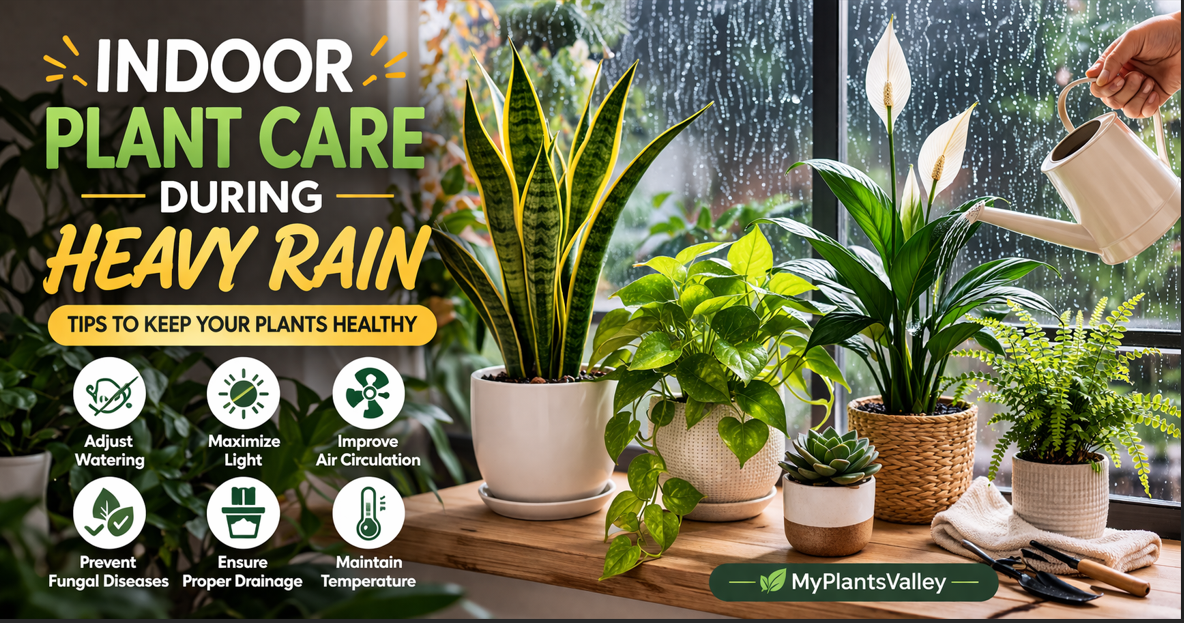
Heavy rain can be refreshing for outdoor plants, but for indoor plants, it often brings hidden challenges like excess humidity, low light, and fungal growth. If not managed properly, these conditions can harm your beloved greenery. In this complete guide from MyPlantsValley, you’ll learn how to protect and care for your indoor plants during heavy rainy seasons.
Why Indoor Plants Need Special Care During Heavy Rain
During heavy rain, environmental conditions change drastically. Even though your plants are indoors, they are still affected by:
- Increased humidity levels
- Reduced sunlight exposure
- Cooler temperatures
- Poor air circulation
These changes can lead to root rot, fungal infections, and slow growth. Understanding these risks is the first step toward protecting your plants.
1. Control Excess Moisture and Humidity
Rainy weather naturally increases indoor humidity, which can be harmful if it becomes excessive.
What to do:
- Avoid overwatering your plants
- Ensure pots have proper drainage holes
- Use a moisture meter or check soil manually before watering
- Keep plants in well-ventilated areas
Why it matters:
Too much moisture can suffocate roots and promote fungal diseases like mold and mildew.
2. Adjust Your Watering Schedule
One of the biggest mistakes plant owners make during heavy rain is continuing the same watering routine.
Best practices:
- Water only when the top 1–2 inches of soil are dry
- Reduce watering frequency during cloudy days
- Avoid watering in the evening (to prevent prolonged moisture retention)
Pro Tip:
Rainy weather slows evaporation, so plants need less water than usual.
3. Maximize Available Light
Heavy rain often means cloudy skies and limited sunlight, which can slow down plant growth.
Solutions:
- Move plants closer to windows or brighter spots
- Clean window glass to improve light penetration
- Rotate plants regularly for even light exposure
- Use grow lights if natural light is insufficient
Why this helps:
Plants rely on light for photosynthesis, and low light can lead to weak, leggy growth.
4. Improve Air Circulation
Poor air circulation combined with high humidity is a major cause of plant diseases.
How to improve airflow:
- Keep windows slightly open when possible
- Use a fan to maintain gentle air movement
- Avoid overcrowding plants
Result:
Better airflow reduces the risk of fungal infections and keeps plants healthier.
5. Prevent Fungal Diseases and Pests
Rainy conditions are ideal for fungus, mold, and pests like gnats.
Preventive steps:
- Remove dead or yellow leaves immediately
- Avoid water sitting on leaves
- Use neem oil or mild fungicide if needed
- Keep plant surroundings clean
Watch for signs:
- White powdery spots
- Mushy stems
- Fungus gnats flying around soil
Early action can save your plant.
6. Ensure Proper Drainage
Waterlogging is one of the biggest dangers during heavy rain.
What to check:
- Pots must have drainage holes
- Use well-draining soil mix
- Empty saucers after watering
Bonus tip:
Add materials like perlite or sand to improve soil drainage.
7. Protect Plants Near Windows
Plants placed near windows may get exposed to rain splashes or strong winds.
Safety measures:
- Move plants slightly away from open windows
- Close windows during heavy storms
- Use curtains or barriers if needed
This prevents physical damage and excess water exposure.
8. Avoid Fertilizing During Heavy Rain
Rainy seasons are not ideal for fertilizing indoor plants.
Why avoid it:
- Plants grow slower due to low light
- Nutrients may not be absorbed properly
- Over-fertilizing can damage roots
Recommendation:
Resume feeding when weather stabilizes and growth improves.
9. Clean Leaves Regularly
Dust and moisture can accumulate on leaves during rainy weather.
Cleaning tips:
- Wipe leaves gently with a damp cloth
- Avoid using harsh chemicals
- Clean once a week
Benefit:
Clean leaves absorb more light and stay disease-free.
10. Monitor Temperature Changes
Rain often brings cooler indoor temperatures, which may stress some plants.
What to do:
- Keep plants away from cold drafts
- Maintain a stable room temperature
- Avoid placing plants near AC vents
Ideal condition:
Most indoor plants prefer temperatures between 18°C–27°C.
Common Mistakes to Avoid During Rainy Season
Avoid these mistakes to keep your plants thriving:
- Overwatering due to habit
- Ignoring poor drainage
- Keeping plants in dark corners
- Skipping pest inspection
- Letting water sit on leaves
Best Indoor Plants for Rainy Season
Some plants naturally thrive in humid conditions:
- Snake Plant
- Pothos
- Peace Lily
- ZZ Plant
- Ferns
These are great choices if you want low-maintenance greenery during monsoon periods.
Final Thoughts
Caring for indoor plants during heavy rain doesn’t have to be difficult. With a few smart adjustments—like reducing watering, improving airflow, and ensuring proper light—you can keep your plants healthy and thriving.
At MyPlantsValley, we believe that understanding seasonal plant care is the key to becoming a successful plant parent. Follow these tips, and your indoor garden will stay lush even during the heaviest rains.
Frequently Asked Questions (FAQs)
1. How often should I water indoor plants during heavy rain?
During heavy rain, you should water less frequently than usual. Always check the top 1–2 inches of soil before watering. If the soil feels moist, skip watering to prevent overwatering and root rot.
2. Can indoor plants get too much humidity during the rainy season?
Yes, excessive humidity can harm indoor plants. While most plants enjoy some humidity, too much can lead to fungal diseases, mold growth, and pest problems. Proper ventilation is essential to balance humidity levels.
3. Why are my indoor plant leaves turning yellow in rainy weather?
Yellow leaves are often a sign of overwatering or poor drainage. During rainy seasons, soil stays wet longer, which can suffocate roots and cause leaf discoloration.
4. Should I fertilize my indoor plants during heavy rain?
It’s best to avoid fertilizing during heavy rain. Plants grow slower due to reduced sunlight, and excess nutrients can build up in the soil, potentially damaging roots.
5. How can I protect my indoor plants from fungal infections?
To prevent fungal issues:
- Avoid overwatering
- Ensure proper airflow
- Remove dead leaves promptly
- Keep foliage dry
- Use neem oil if needed