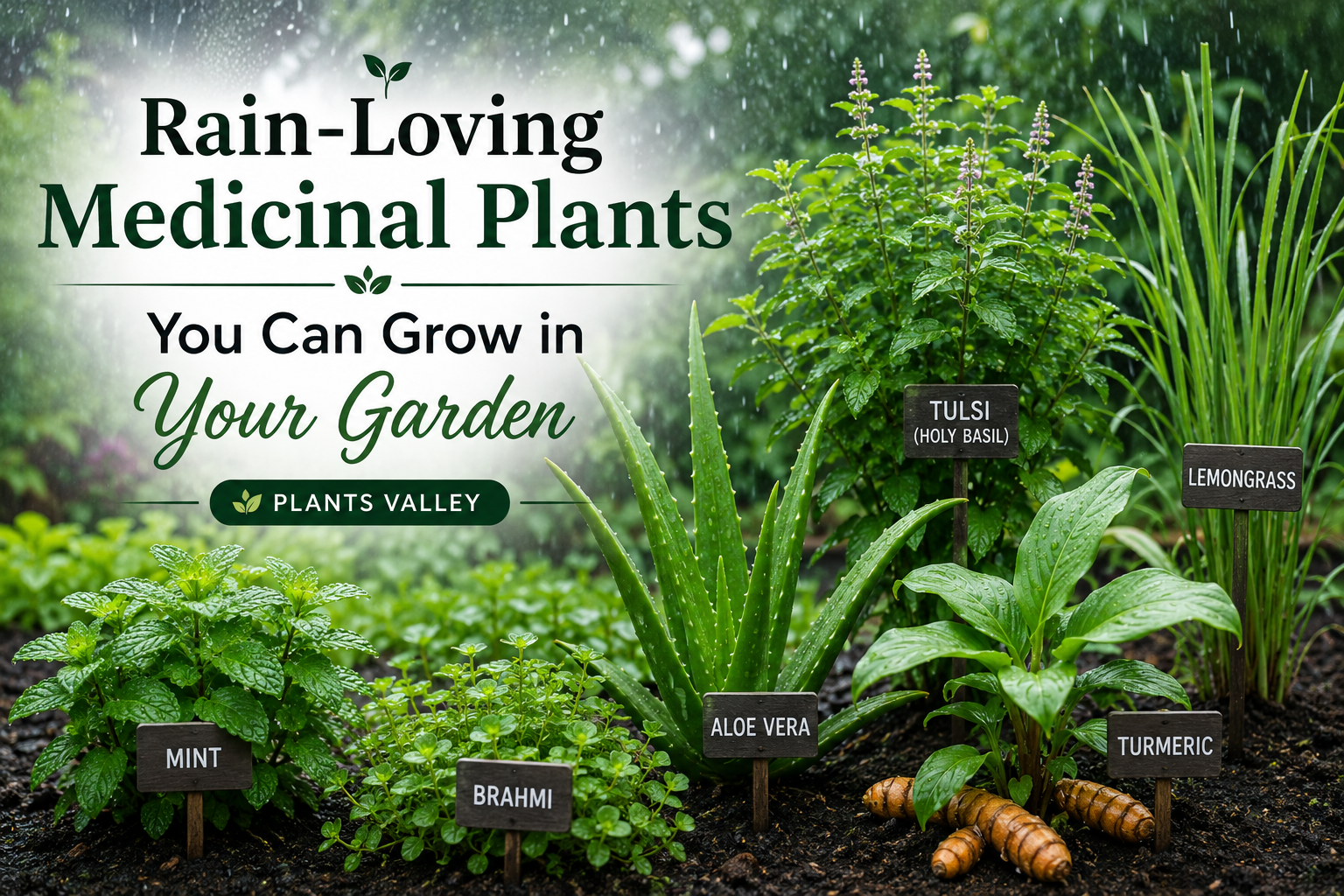
The rainy season brings fresh energy to every garden, making it the perfect time to grow medicinal plants that thrive in moist, humid conditions. At Plants Valley, I always recommend using this season to cultivate herbs that not only grow quickly but also offer powerful health benefits. Rainwater naturally nourishes plants with essential minerals, helping them become greener and more vibrant.
Growing medicinal plants during monsoon is also beginner-friendly, as many species require less maintenance and adapt well to changing weather. From boosting immunity to treating minor health issues, these plants can become a natural home remedy kit right in your backyard. In this guide, I’ll share some of the best rain-loving medicinal plants you can easily grow, along with simple care tips to keep them healthy and productive throughout the season.
Tulsi (Holy Basil)
Tulsi is one of the most popular medicinal plants, especially during the rainy season. It thrives in warm, humid conditions and grows quickly with minimal care. I’ve found that tulsi becomes even more aromatic and potent when nourished by rainwater.
This plant is widely known for boosting immunity, relieving cold and cough, and improving respiratory health—common concerns during monsoon. Tulsi prefers well-drained soil, so make sure your pots or garden beds don’t retain excess water.
Place it in a spot where it gets partial sunlight, and avoid overwatering since rain usually provides enough moisture. Regular pruning helps it grow bushier and healthier. Having tulsi at home is like having a natural medicine cabinet that supports your family’s well-being.
Aloe Vera
Aloe vera is another excellent medicinal plant that adapts well to the rainy season when proper drainage is maintained. While it doesn’t like excessive water, the humidity during monsoon helps it grow thick, juicy leaves rich in healing gel.
I often recommend aloe vera for its skin-soothing properties. It’s perfect for treating minor burns, cuts, and skin irritation. It also supports digestion when used properly.
To grow aloe vera successfully, use sandy, well-draining soil and keep it in a semi-covered area to protect it from heavy rainfall. Too much water can cause root rot, so ensure pots have drainage holes. With just a little attention, aloe vera becomes a low-maintenance yet highly beneficial addition to your garden.
Neem
Neem is a powerful medicinal plant known for its antibacterial and antifungal properties. The rainy season is ideal for planting neem, as the moist soil helps young plants establish strong roots.
I like to think of neem as a natural protector for both health and garden. Its leaves can be used to treat skin issues, purify blood, and even repel pests naturally.
Neem trees require space, so they are best suited for outdoor gardens. Once established, they need very little care. Ensure good drainage and allow the plant to receive ample sunlight. Over time, neem becomes a long-term investment in both health and sustainable gardening.
Mint (Pudina)
Mint grows extremely well during the rainy season due to the increased moisture in the air and soil. It spreads quickly and can easily fill a pot or garden bed in a short time.
This refreshing herb is excellent for digestion, relieving nausea, and adding flavor to drinks and dishes. I often use fresh mint leaves to make herbal tea during rainy days.
Mint prefers partial shade and moist soil, but it’s important to avoid waterlogging. Regular trimming keeps the plant from becoming too invasive and encourages fresh growth. If you’re new to gardening, mint is one of the easiest and most rewarding plants to grow.
Ginger
Ginger is a must-have medicinal plant for the rainy season. It thrives in warm, damp soil and requires minimal effort to grow. I’ve found it especially useful during monsoon when digestive issues and colds are more common.
Ginger has strong anti-inflammatory and immune-boosting properties. It’s widely used in teas and home remedies to fight infections and improve digestion.
To grow ginger, plant rhizomes in loose, well-drained soil and keep them in a partially shaded area. Consistent moisture is key, but avoid standing water. Over time, the plant develops underground roots that can be harvested for use in your kitchen and medicine cabinet.
Conclusion
The rainy season offers a golden opportunity to grow medicinal plants that are both easy to maintain and highly beneficial. At Plants Valley, I always encourage adding plants like tulsi, aloe vera, neem, mint, and ginger to your garden during this time. Not only do they thrive naturally, but they also support a healthier lifestyle using simple, homegrown remedies.
With the right care—especially proper drainage and balanced sunlight—these plants can flourish throughout the monsoon. Starting your medicinal garden now means you’ll enjoy fresh, natural health benefits all year round.
FAQs: Rain-Loving Medicinal Plants
1. Which medicinal plants grow best during the rainy season?
I recommend tulsi, mint, ginger, neem, and aloe vera. These plants thrive in humid conditions and grow faster with natural rainwater.
2. How do I prevent overwatering during monsoon?
Make sure your pots have proper drainage holes. I always use well-draining soil and avoid adding extra water when rainfall is frequent.
3. Can I grow medicinal plants indoors during the rainy season?
Yes, plants like mint, tulsi, and aloe vera grow well indoors. Just place them near a window where they get indirect sunlight and good airflow.
4. What are common problems for plants in the rainy season?
Fungal infections, root rot, and pests are common. I suggest regular pruning, proper spacing, and using natural fungicides like neem oil.
5. How often should I fertilize during monsoon?
I usually reduce fertilizing since rainwater already contains nutrients. Once every 3–4 weeks with organic compost is enough.
6. Is rainwater good for medicinal plants?
Yes, rainwater is naturally soft and chemical-free. It helps plants grow healthier and greener compared to tap water.