
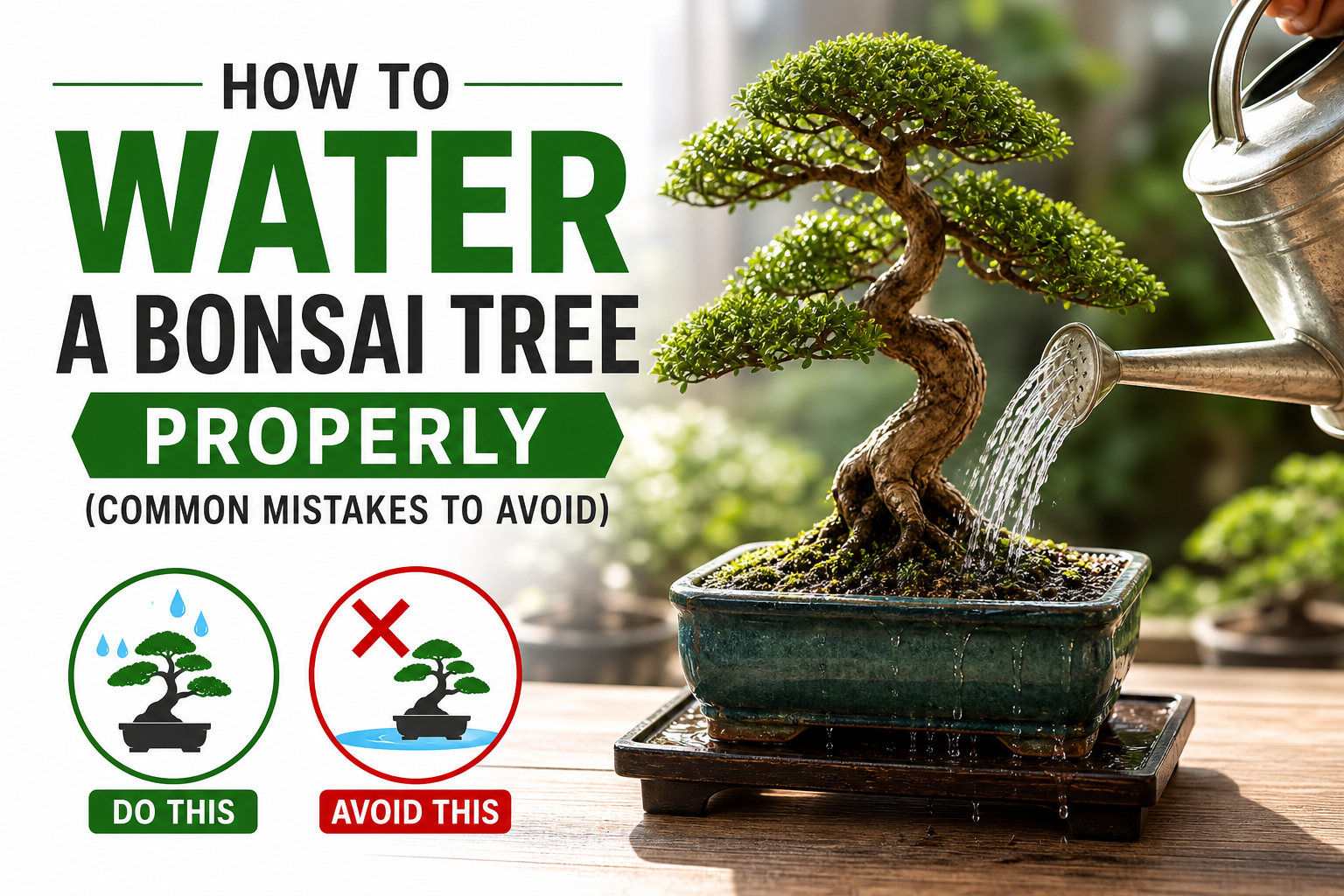
I’ve learned that watering is the most important—and most misunderstood—part of bonsai care. Unlike regular potted plants, bonsai trees grow in shallow containers with limited soil, which means they dry out faster but are also sensitive to overwatering. Many beginners think there’s a fixed schedule, but in reality, proper watering depends on your tree type, climate, soil, and season. If you water too much, roots can rot; if you water too little, the tree can quickly dry out. The goal is balance. In this guide, I’ll walk you through how to water your bonsai correctly, the signs to watch for, and the most common mistakes you should avoid to keep your bonsai healthy and thriving.
How Often Should You Water a Bonsai?
I don’t follow a strict schedule—instead, I check the soil daily. Bonsai trees should be watered when the topsoil feels slightly dry, not completely dry or constantly wet. In summer, I may water once or even twice a day, while in winter, watering might only be needed every few days.
Factors that affect watering frequency include:
- Tree species (tropical vs. deciduous)
- Pot size and soil type
- Temperature and humidity
- Sunlight exposure
A simple trick I use is inserting my finger about an inch into the soil. If it feels dry, it’s time to water. If it’s still moist, I wait.
The Correct Way to Water a Bonsai
When I water my bonsai, I make sure to do it thoroughly. Light sprinkling isn’t enough. I water until it drains out from the holes at the bottom of the pot. This ensures the entire root system gets hydrated.
Here’s my method:
- Use a watering can with a fine nozzle
- Water evenly across the soil surface
- Continue until water flows out from drainage holes
- Repeat once more after a minute for deep soaking
I also prefer watering in the morning or evening to reduce evaporation.
Signs Your Bonsai Needs Water
Your bonsai will show clear signs when it needs watering. I always watch for:
- Dry or cracking soil
- Leaves looking dull or droopy
- Soil pulling away from the edges of the pot
Catching these signs early helps prevent stress on the tree.
Common Bonsai Watering Mistakes to Avoid
1. Overwatering
This is the most common mistake I see. Constantly wet soil suffocates roots and leads to root rot. Make sure your pot has proper drainage and never let water sit in a tray for too long.
2. Underwatering
Letting the soil dry out completely can quickly damage your bonsai. Unlike regular plants, bonsai roots don’t have deep reserves of moisture.
3. Watering on a Fixed Schedule
I avoid watering “every day” without checking the soil. Conditions change, and your watering routine should adapt.
4. Using Poor Soil
Dense soil holds too much water. I always use well-draining bonsai soil to maintain the right balance.
5. Ignoring Seasonal Changes
In summer, bonsai need more water; in winter, much less. Adjusting your routine is essential.
Best Watering Tips for Healthy Bonsai
From my experience, these tips make a big difference:
- Use rainwater or filtered water if possible
- Mist leaves occasionally for humidity (especially indoors)
- Ensure proper drainage holes in the pot
- Group plants together to maintain humidity
- Protect from extreme heat to reduce water loss
Conclusion
Watering a bonsai tree properly isn’t about sticking to a strict routine—it’s about understanding your tree’s needs. I always focus on observing the soil, the environment, and the tree itself. Once you get the balance right, your bonsai will grow healthier, stronger, and more beautiful. Avoid the common mistakes, stay consistent with your care, and your bonsai will reward you with long-lasting beauty.
FAQs: How to Water a Bonsai Tree Properly
1. How do I know if my bonsai needs water?
I check the topsoil daily. If it feels slightly dry about 1 inch deep, it’s time to water. Dry soil, dull leaves, or drooping are clear signs.
2. Can I water my bonsai every day?
I avoid fixed schedules. Some days it needs water, others it doesn’t. It depends on weather, soil, and tree type.
3. What is the best time to water a bonsai tree?
I prefer early morning or evening. This reduces evaporation and helps the tree absorb water effectively.
4. Can I use tap water for bonsai?
Yes, I use tap water, but if it’s very hard or chlorinated, I let it sit overnight or use filtered water.
5. Is misting enough for watering bonsai?
No, misting only adds humidity. I always water the soil thoroughly until it drains from the bottom.
6. What happens if I overwater my bonsai?
Overwatering can cause root rot. I make sure the soil drains well and never stays soggy.