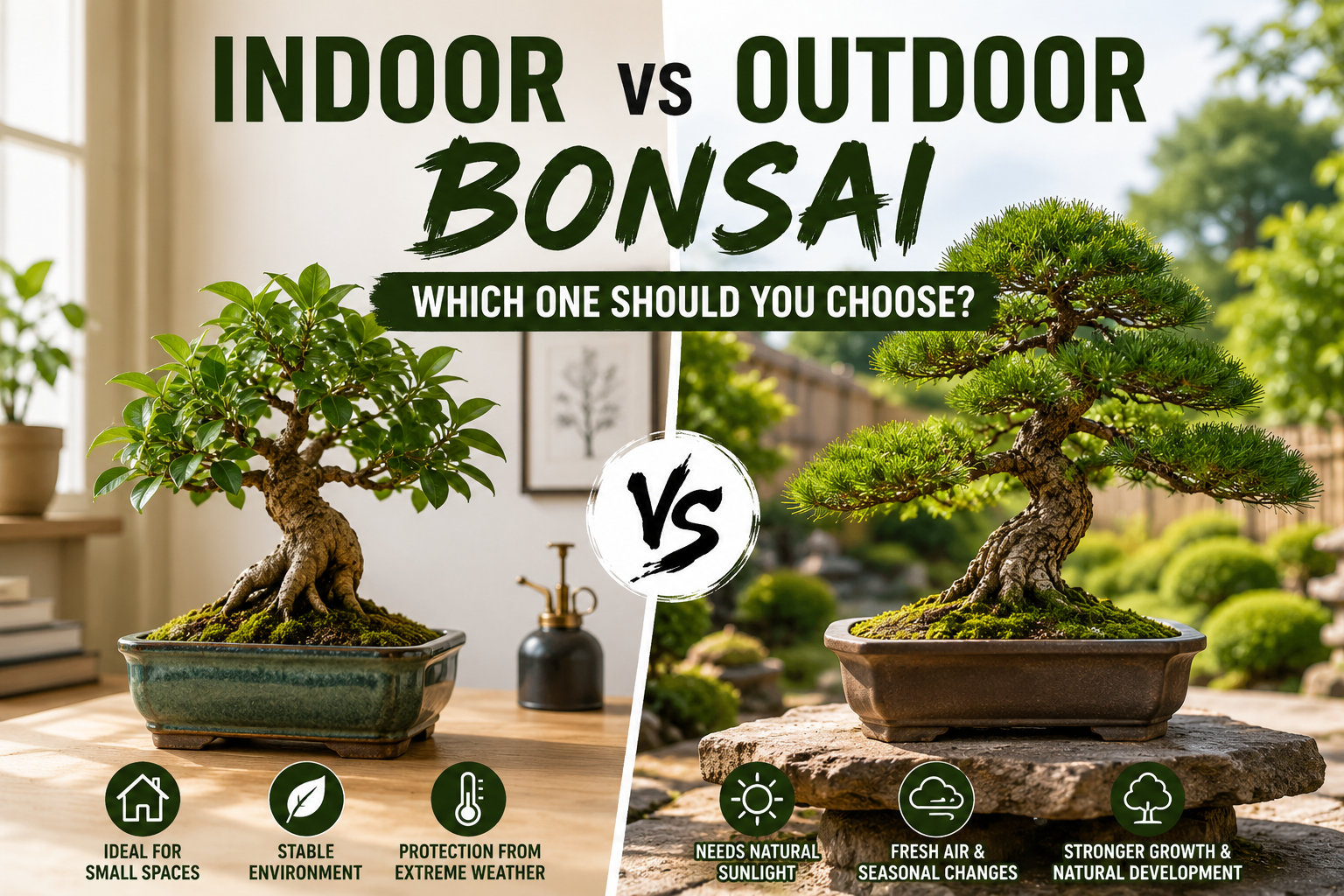
When I first started exploring bonsai, one of the biggest questions I faced was whether to grow my bonsai indoors or outdoors. The choice isn’t just about placement—it directly affects the health, growth, and longevity of your tree. Bonsai are not a specific type of plant but rather miniature versions of real trees, and each species has its own natural habitat requirements. Some thrive in outdoor conditions with seasonal changes, while others adapt better to stable indoor environments. Understanding the difference between indoor and outdoor bonsai helps me avoid common beginner mistakes and ensures long-term success.
In this guide, I’ll break down the key differences, benefits, and challenges of each option so you can confidently choose the right bonsai for your home and lifestyle.
What Is an Indoor Bonsai?
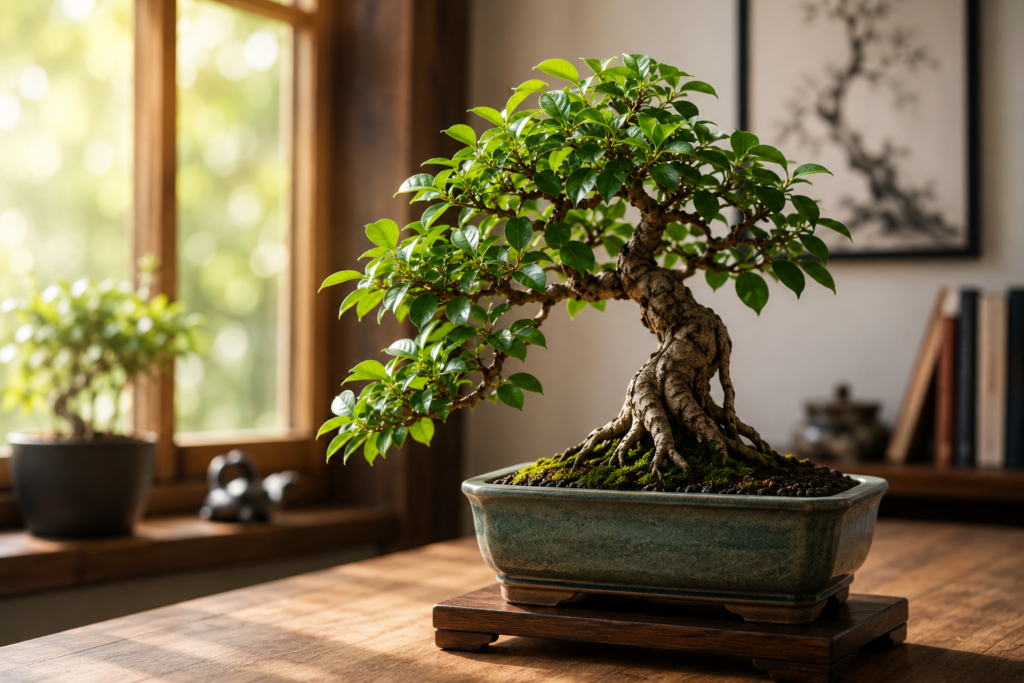
When I talk about indoor bonsai tree, I’m usually referring to tropical or subtropical species that can survive in stable indoor conditions. These trees are not naturally “indoor” plants, but they tolerate lower light and consistent temperatures better than outdoor varieties. Popular indoor bonsai include Ficus, Jade, and Chinese Elm (in some climates).
Indoor bonsai thrive in bright, indirect sunlight—placing them near a window is often essential. I’ve noticed they need careful watering because indoor air can be dry, especially with air conditioning or heating. Humidity trays or occasional misting help maintain the right moisture levels.
The biggest advantage of indoor bonsai is convenience. I can enjoy them year-round regardless of weather conditions. However, they do require attention to light, humidity, and airflow. Without enough light, they may weaken or drop leaves. Indoor bonsai are perfect if I live in an apartment or don’t have outdoor space, but they still demand a bit of environmental control to stay healthy.
What Is an Outdoor Bonsai?
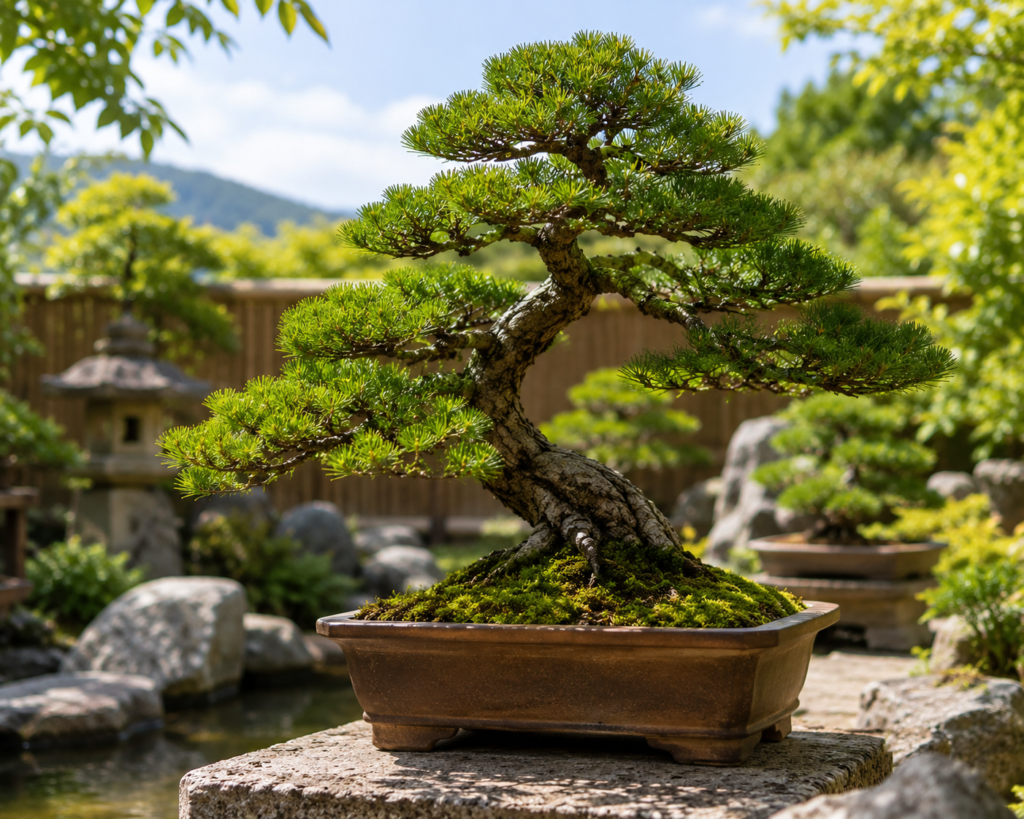
Outdoor bonsai are trees that naturally grow in temperate climates and require seasonal changes to thrive. These include species like Juniper, Pine, Maple, and Elm. I’ve learned that these bonsai need exposure to sunlight, fresh air, and even winter dormancy to stay healthy.
Unlike indoor bonsai, outdoor varieties depend heavily on natural conditions. They require direct sunlight for several hours a day, which helps maintain strong growth and vibrant foliage. Seasonal changes—especially colder temperatures—are essential for their life cycle.
One thing I always keep in mind is that outdoor bonsai tree are generally more resilient. They adapt well to natural humidity and airflow, making them easier to maintain in the long run. However, they do require protection from extreme weather, like heavy storms or intense heat. If I have a balcony, garden, or rooftop, outdoor bonsai can be a rewarding choice that closely mimics how trees grow in nature.
Key Differences Between Indoor and Outdoor Bonsai
The main difference I notice between indoor and outdoor bonsai lies in their environmental needs. Indoor bonsai prefer stable temperatures and controlled conditions, while outdoor bonsai rely on natural seasonal cycles.
Lighting is another major factor. Indoor bonsai depend on bright indoor light, but outdoor bonsai need direct sunlight for optimal growth. Watering habits also differ—indoor bonsai may dry out slower but require humidity support, while outdoor bonsai often need more frequent watering due to sun exposure.
Maintenance can vary as well. Indoor bonsai demand closer monitoring of light and humidity, while outdoor bonsai require weather protection and seasonal care. Growth patterns differ too—outdoor bonsai typically grow stronger and more naturally due to ideal conditions.
From my experience, indoor bonsai are more about managing the environment, while outdoor bonsai are about adapting to nature. Choosing between them depends on my living space, time, and how much control I can maintain over the plant’s surroundings.
Which One Should You Choose?
If I’m living in a small apartment with limited outdoor space, indoor bonsai is usually the better option. It allows me to enjoy bonsai without worrying about weather conditions. However, I must ensure proper lighting and humidity to keep the plant healthy.
On the other hand, if I have access to a balcony, terrace, or garden, outdoor bonsai is often the best choice. These trees grow more naturally and tend to be stronger over time. They also require less artificial care compared to indoor varieties.
I always recommend beginners start with a hardy species that matches their environment. For indoor settings, Ficus is a great starting point. For outdoor spaces, Juniper is one of the easiest to maintain.
Ultimately, the right choice depends on my lifestyle and environment. By matching the bonsai type to my conditions, I can ensure a thriving and beautiful miniature tree that brings long-term satisfaction.
Final Thoughts
Choosing between indoor and outdoor bonsai isn’t about which one is better—it’s about what works best for me. Indoor bonsai offer flexibility and convenience, while outdoor bonsai provide a more natural and robust growing experience. Once I understand the needs of each type, I can make a confident decision and enjoy the rewarding journey of bonsai care.
FAQs: Indoor vs Outdoor Bonsai
1. Can I keep any bonsai tree indoors?
No, I’ve learned that not all bonsai can survive indoors. Only tropical and subtropical species like Ficus or Jade adapt well to indoor conditions. Most traditional bonsai, such as Juniper or Pine, need outdoor environments to thrive.
2. Which bonsai is best for beginners?
From my experience, Ficus is the easiest indoor bonsai for beginners because it’s forgiving and adaptable. For outdoor bonsai, Juniper is a great starting choice due to its resilience and low maintenance needs.
3. How much sunlight does a bonsai need?
Indoor bonsai need bright, indirect sunlight, ideally near a window. Outdoor bonsai require direct sunlight for several hours daily. Without proper light, I’ve noticed bonsai can become weak and unhealthy.
4. Can I move my bonsai between indoor and outdoor?
I try to avoid frequent moving because bonsai can get stressed. However, some indoor bonsai can benefit from occasional outdoor exposure in warm weather.
5. Do outdoor bonsai need winter care?
Yes, outdoor bonsai need protection during extreme cold. While many require winter dormancy, I make sure they are shielded from harsh frost and strong winds.