
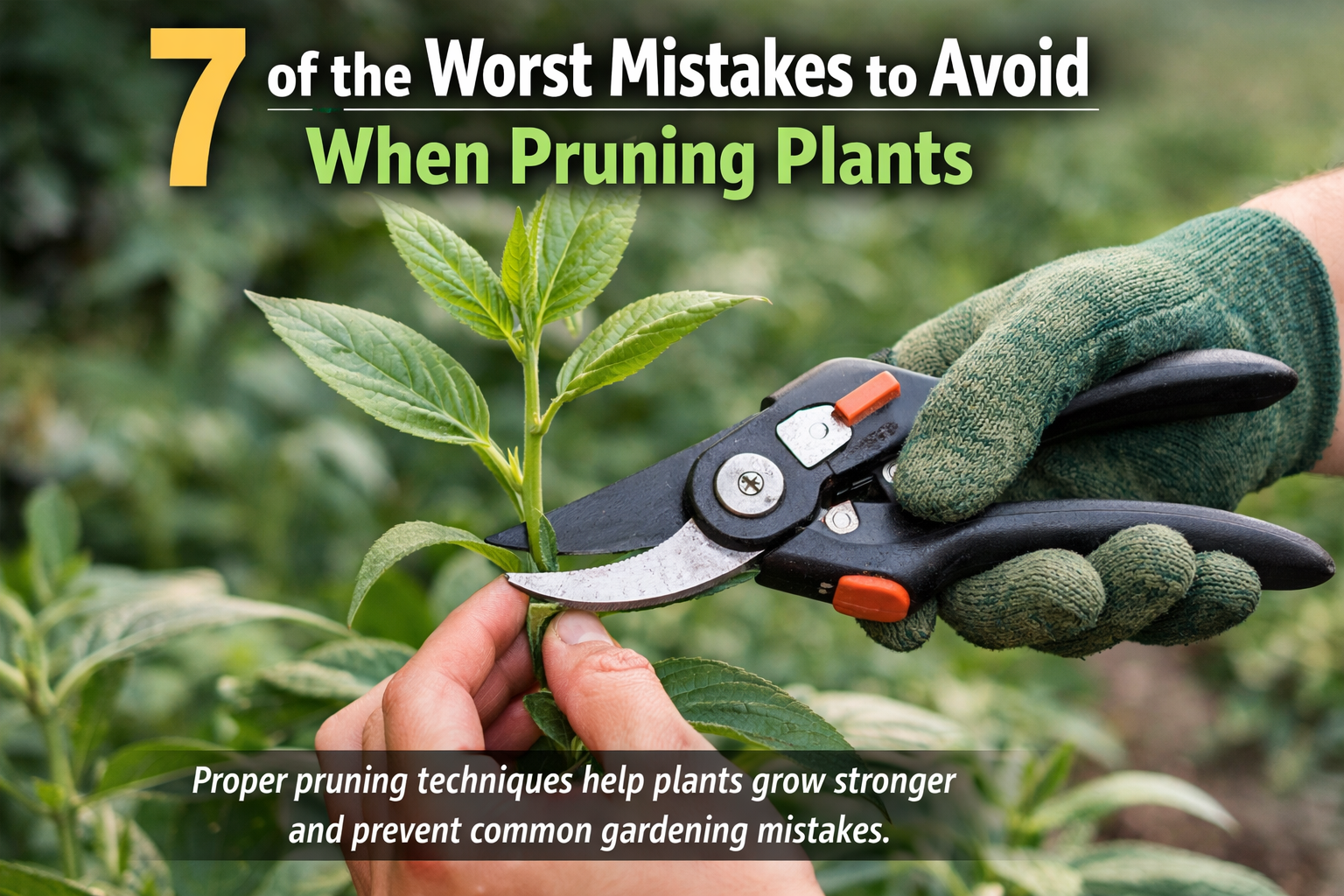
Pruning is one of those gardening tasks that seems simple at first glance. You grab a pair of shears, trim a few branches, and assume your plant will thank you for it. But the truth is, improper pruning can actually harm plants more than help them. Many gardeners unknowingly damage their plants by cutting at the wrong time, removing too much growth, or using dull tools.
When done correctly, pruning plants encourages stronger growth, improves air circulation, prevents disease, and shapes the plant beautifully. However, when done incorrectly, it can weaken the plant, reduce flowering, and even kill certain species. This is why understanding the most common pruning mistakes is essential for every plant lover.
If you manage a plant-focused website like My Plants Valley, sharing accurate pruning advice helps readers avoid these costly errors. After all, plants respond to pruning the same way people respond to surgery—done properly, it helps; done poorly, it causes serious problems.
In this guide, I will walk you through 7 of the worst pruning mistakes gardeners make and explain exactly how to avoid them. Whether you care for indoor plants, garden shrubs, or flowering trees, these tips will help your plants grow healthier, fuller, and stronger.
Understanding Why Proper Pruning Matters
Pruning is much more than simply cutting away extra branches. When done correctly, pruning helps plants direct energy toward healthier growth, encourages new shoots, and improves overall structure. Think of pruning like giving your plant a strategic haircut. Instead of random cuts, you are shaping the plant so that sunlight, air, and nutrients can reach every part of it.
Healthy pruning practices also help prevent plant diseases and pest infestations. Overcrowded branches often trap moisture and reduce airflow, creating the perfect environment for fungal diseases. By removing excess growth, you allow the plant to breathe and stay healthier. This is particularly important for indoor plants and dense shrubs.
Another major benefit of pruning is stimulating flowering and fruit production. Many flowering plants produce blooms on new growth, meaning proper pruning can significantly increase flower production. Gardeners who understand this technique often enjoy larger harvests and more vibrant gardens.
However, the opposite is also true. Poor pruning practices can weaken plants, slow growth, and cause permanent structural damage. That is why learning what not to do is just as important as learning the right techniques. Avoiding common mistakes ensures your plants thrive instead of struggle.
Mistake #1: Pruning Plants at the Wrong Time
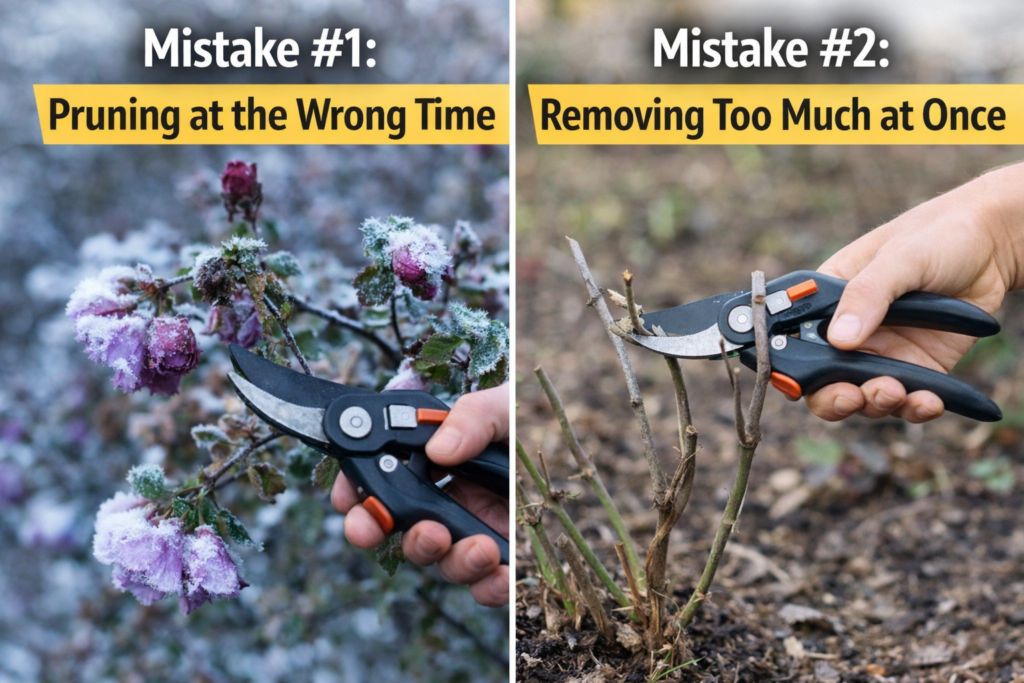
Timing is one of the most important factors in successful pruning. Unfortunately, many gardeners prune plants whenever they notice overgrown branches without considering the plant’s natural growth cycle. Pruning at the wrong time can reduce flowering, stunt growth, and even expose plants to disease.
Plants follow seasonal growth patterns. Some plants bloom on new growth, while others bloom on old wood. If you prune a spring-flowering shrub too late in the season, you might accidentally remove the buds that were supposed to bloom next year. That means an entire season without flowers.
For example, roses and many fruit trees are typically pruned during late winter or early spring when they are dormant. This encourages strong growth when the growing season begins. On the other hand, spring-flowering shrubs like lilacs should be pruned immediately after flowering so the plant has time to produce buds for the following year.
Another issue with improper timing is plant stress. During hot summer months, heavy pruning can shock plants and reduce their ability to retain moisture. Similarly, pruning just before winter can leave plants vulnerable to cold damage.
Understanding your plant’s seasonal pruning schedule ensures you cut at the right moment and help the plant grow stronger instead of weaker.
Mistake #2: Removing Too Much of the Plant at Once
One of the biggest mistakes gardeners make is over-pruning. It can be tempting to drastically trim a plant that looks messy or overgrown, but removing too much foliage at once can severely stress the plant. Leaves play a critical role in photosynthesis, which is how plants produce energy. When you remove too many leaves, the plant loses its ability to generate enough energy for healthy growth.
Experts often recommend following the one-third rule. This guideline suggests that you should never remove more than one-third of a plant’s growth during a single pruning session. Doing so allows the plant to recover properly and continue growing without excessive stress.
Over-pruning can also cause unexpected growth patterns. When a plant suddenly loses a large portion of its branches, it often responds by producing rapid, weak shoots known as water sprouts. These shoots grow quickly but are structurally weak and prone to breaking.
Another problem with heavy pruning is that it leaves plants more vulnerable to pests and diseases. Large cuts expose internal plant tissue, creating entry points for harmful organisms. This can lead to infections that spread throughout the plant.
The best approach is gradual pruning. Trim small sections at a time and observe how the plant responds before making additional cuts.
Mistake #3: Using Dull or Dirty Pruning Tools
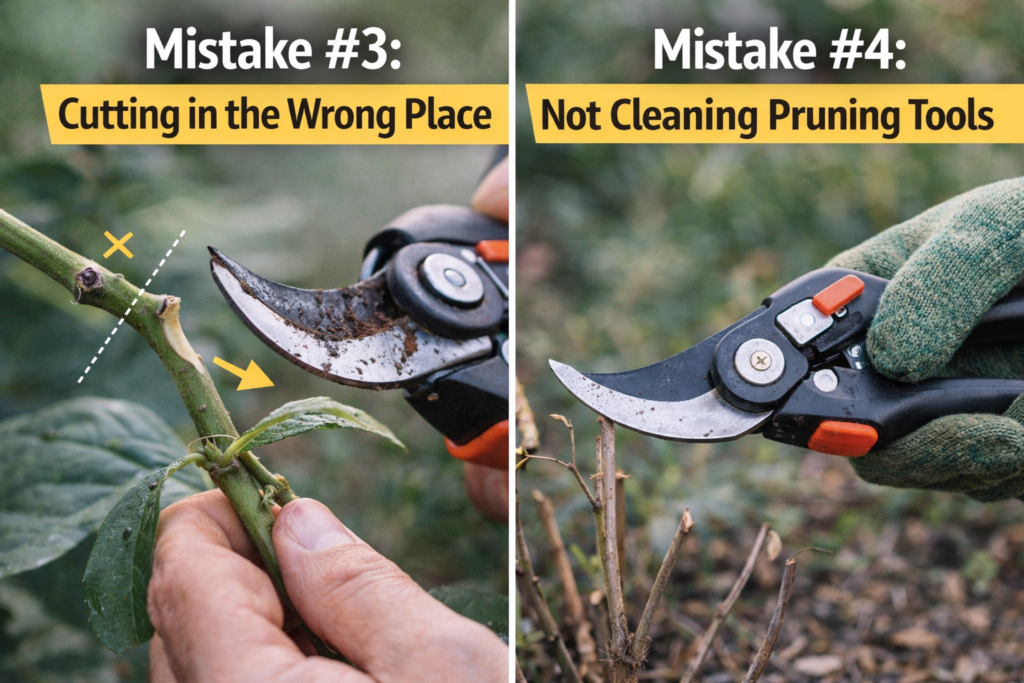
Many gardeners overlook the importance of their tools, but the condition of pruning tools directly affects plant health. Using dull or dirty tools can cause jagged cuts that damage plant tissue and increase the risk of disease. A clean, sharp cut heals much faster and allows the plant to recover quickly.
Dull blades crush stems instead of slicing them cleanly. This crushing damage disrupts the plant’s vascular system, making it harder for water and nutrients to move through the plant. Over time, this can weaken the entire plant structure.
Dirty tools are even more dangerous because they can spread plant diseases from one plant to another. Bacteria, fungi, and viruses often cling to pruning blades. If you trim a diseased plant and then move to a healthy one without cleaning your tools, you may unknowingly spread the infection.
Professional gardeners typically disinfect their tools between plants using alcohol or a diluted bleach solution. This simple step dramatically reduces the risk of disease transmission.
Keeping tools sharp and clean not only protects your plants but also makes pruning easier and more precise. It is a small habit that can make a huge difference in long-term plant health.
Mistake #4: Cutting Branches in the Wrong Place
Where you make the cut is just as important as when you prune. Improper cutting techniques can permanently damage a plant’s growth pattern. Many beginners cut branches randomly, leaving stubs or trimming too close to the main stem.
The ideal place to prune is just above a node, which is the point where a leaf or branch emerges from the stem. Nodes contain growth cells that allow the plant to produce new shoots. Cutting just above a node encourages the plant to grow in a specific direction.
Leaving long stubs is another common mistake. These stubs eventually die and can become entry points for pests and diseases. At the same time, cutting too close to the trunk or main stem can damage the plant’s protective tissue, slowing the healing process.
Proper pruning also involves cutting at a slight angle. Angled cuts help water run off the surface instead of collecting on the wound. Standing water can lead to fungal infections that harm the plant.
Learning correct cutting techniques ensures the plant heals quickly and continues growing in a healthy, balanced shape.
Mistake #5: Ignoring Dead or Diseased Branches
Some gardeners focus only on shaping plants and forget about removing unhealthy growth. Dead, damaged, or diseased branches should always be the first priority during pruning. Leaving them on the plant allows problems to spread.
Dead branches not only look unattractive but also attract pests such as beetles and borers. These insects often use weakened branches as entry points before spreading to healthier parts of the plant.
Diseased branches are even more dangerous. Fungal infections can quickly spread through the plant’s vascular system if infected sections are not removed promptly. Early removal of diseased areas can often save the entire plant.
Another issue with dead branches is that they block sunlight and airflow. Dense, unhealthy growth creates humid conditions that encourage mold and fungal growth. By removing these sections, you improve ventilation and reduce disease risk.
During every pruning session, start by inspecting the plant carefully. Remove all dead, broken, or infected branches before shaping the plant. This simple step significantly improves plant health and longevity.
Mistake #6: Over-Pruning Young Plants
Young plants require special care because they are still establishing their root systems and growth patterns. Excessive pruning during the early stages can weaken the plant and slow its development. Many gardeners prune young plants heavily in an attempt to shape them early, but this often backfires.
When a plant is young, it needs as many leaves as possible to produce energy through photosynthesis. Removing too much foliage reduces the plant’s ability to grow strong roots and stems. This can delay maturity and make the plant more vulnerable to environmental stress.
Instead of heavy pruning, focus on light training cuts. These small adjustments help guide the plant’s shape without removing large sections of growth. As the plant matures and becomes stronger, more extensive pruning can be done safely.
Patience is key when working with young plants. Allowing them to grow naturally during the early stages ensures they develop a solid structure. Once the plant is well established, pruning becomes much safer and more effective.
Mistake #7: Not Understanding Plant Type Before Pruning
Every plant species responds differently to pruning. Treating all plants the same is a common mistake that leads to poor results. Trees, shrubs, houseplants, and flowering plants all have unique pruning needs.
For example, many houseplants such as pothos or philodendrons respond well to regular trimming because it encourages bushier growth. On the other hand, certain flowering shrubs only bloom on older branches, meaning aggressive pruning can eliminate next season’s flowers.
Fruit trees require a very specific pruning technique that balances fruit production with structural strength. Cutting incorrectly can reduce yields or weaken the tree’s branches.
Understanding the specific requirements of each plant species is essential. Researching pruning methods for your particular plant ensures that you support its natural growth habits rather than working against them.
Gardeners who take the time to learn about their plants often enjoy healthier gardens, stronger plants, and more beautiful blooms.
Quick Comparison Table: Good vs Bad Pruning Habits
| Good Pruning Practice | Bad Pruning Practice |
|---|---|
| Pruning during the correct season | Pruning randomly anytime |
| Using clean, sharp tools | Using dull or dirty tools |
| Removing only one-third of growth | Cutting off half the plant |
| Cutting above nodes | Leaving long stubs |
| Removing diseased branches first | Ignoring unhealthy growth |
| Researching plant type | Treating all plants the same |
Conclusion
Pruning is one of the most powerful techniques gardeners can use to maintain healthy, beautiful plants. When done correctly, it encourages stronger growth, improves airflow, and enhances flowering. But when done poorly, it can weaken plants and create long-term problems.
Avoiding the seven major pruning mistakes discussed in this guide can dramatically improve plant health. Timing your pruning correctly, using sharp tools, making proper cuts, and understanding each plant’s needs are essential steps toward successful gardening.
Whether you are caring for indoor plants, garden shrubs, or fruit trees, thoughtful pruning ensures your plants continue to thrive year after year.
FAQs
1. How often should plants be pruned?
Most plants benefit from pruning once or twice per year. However, the exact frequency depends on the species and growth rate.
2. What is the best season for pruning plants?
Late winter or early spring is ideal for many plants because they are dormant and ready for new growth.
3. Can pruning help plants grow faster?
Yes. Proper pruning redirects energy to healthy branches and encourages stronger growth.
4. What tools are best for pruning plants?
Sharp pruning shears, loppers, and pruning saws are commonly used depending on branch size.
5. Is it possible to save an over-pruned plant?
Often yes. Provide proper watering, nutrients, and time for recovery, and many plants will gradually regrow.