Kalanchoe plants are the ultimate “low-effort, high-reward” succulents, making them a staple for indoor gardeners and landscape enthusiasts alike. Native primarily to Madagascar, these resilient plants are famous for their thick, waxy foliage and vibrant, long-lasting floral clusters that bloom in brilliant shades of red, pink, yellow, and orange. Their ability to store water in their leaves makes them incredibly drought-tolerant, surviving even when watering is forgotten. Whether you are looking for a colorful “Florist’s Kalanchoe” to brighten a winter windowsill or a unique “Panda Plant” for its fuzzy texture, this genus offers unmatched versatility and beauty.
What Are Kalanchoe Plants?
Kalanchoe, pronounced “kal-un-KOH-ee,” refers to a diverse genus of succulent flowering plants belonging to the Crassulaceae family. Native to tropical and subtropical regions, particularly Madagascar and Africa, these plants are celebrated for their vibrant, long-lasting blooms and their incredibly resilient, low-maintenance nature. Most Kalanchoe varieties feature thick, waxy leaves that store water, allowing them to thrive even with infrequent watering, making them perfect for busy gardeners or those new to houseplants.
Why Kalanchoe Is So Popular Among Gardeners
Kalanchoe’s popularity stems from a winning combination of features:
- Stunning, Long-Lasting Blooms: They offer a riot of color, with flowers that can last for weeks, often even months.
- Easy Care: As succulents, they tolerate neglect and thrive with minimal attention, making them ideal for beginners.
- Versatility: They adapt well to both indoor container life and outdoor garden settings in warmer climates.
- Variety: The genus offers a wide range of leaf shapes, textures, and flower types beyond the common florist’s kalanchoe.
Origin and Botanical Background
Natural Habitat of Kalanchoe
The Kalanchoe genus boasts over 125 species, primarily originating from Madagascar and parts of tropical Africa. In their natural habitats, these plants are often found growing in dry, rocky, or sandy soils, enduring periods of drought. This harsh environment is precisely why they developed their succulent characteristics – thick leaves designed to store water for survival.
Family and Scientific Classification
Kalanchoe belongs to the family Crassulaceae, which is a large family of succulent plants. Its scientific classification is as follows:
- Kingdom: Plantae
- Clade: Tracheophytes
- Clade: Angiosperms
- Clade: Eudicots
- Clade: Core Eudicots
- Order: Saxifragales
- Family: Crassulaceae
- Subfamily: Sedoideae
- Tribe: Kalanchoeae
- Genus: Kalanchoe
Types of Kalanchoe Plants
While there are many species, a few stand out for their popularity and distinct characteristics.
Kalanchoe Blossfeldiana
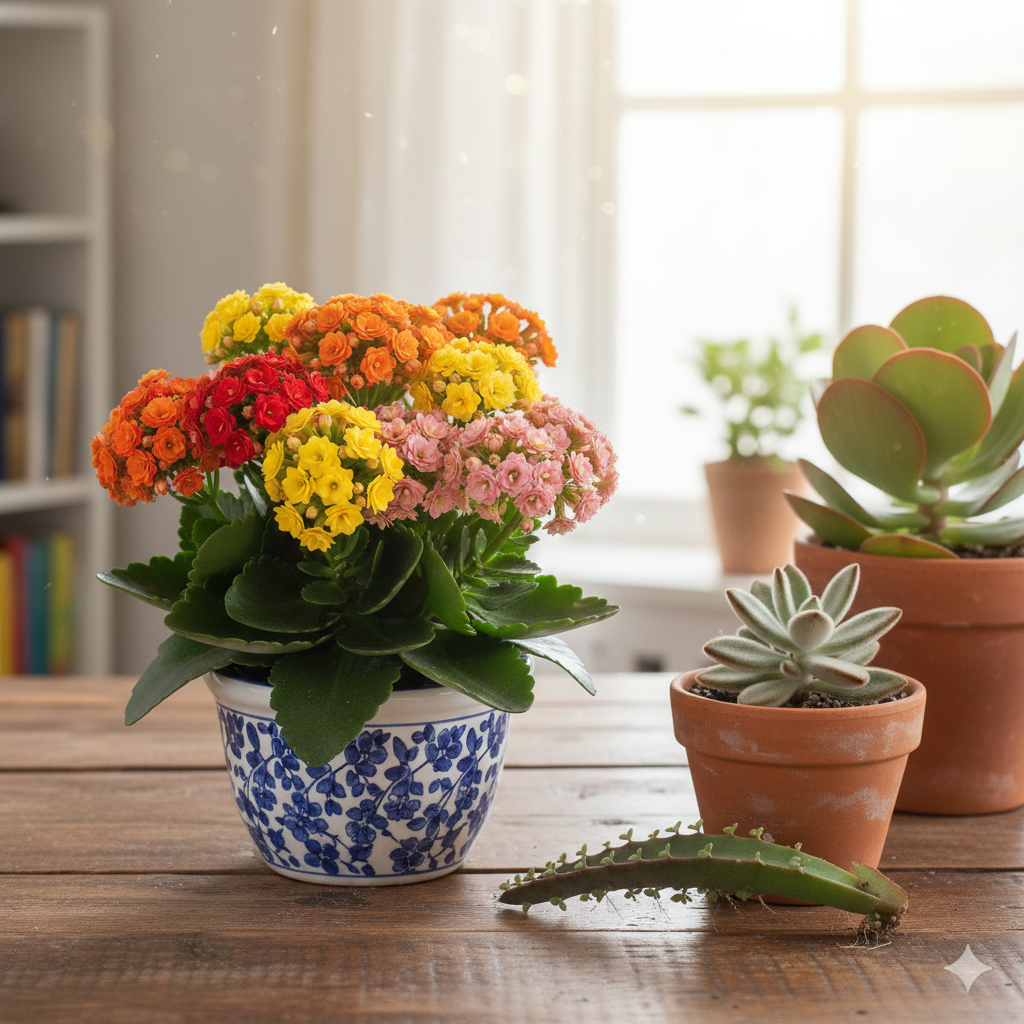
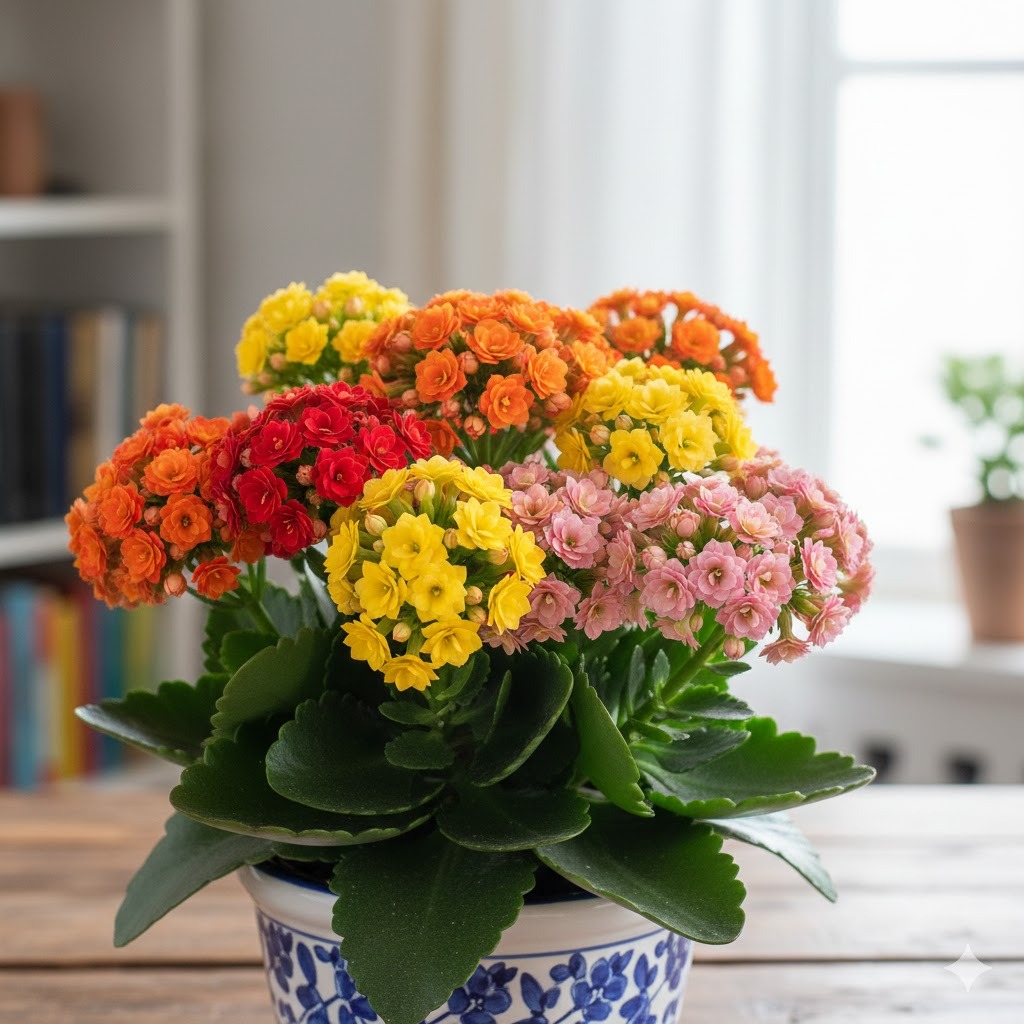
This is perhaps the most recognized Kalanchoe, often simply called “florist’s Kalanchoe” or “Christmas Kalanchoe.” It’s famous for its abundant clusters of small, bright flowers in shades of red, orange, pink, yellow, and white. Its dark green, scalloped leaves provide a perfect backdrop for the vibrant blooms. This is the variety most commonly found in nurseries and grocery stores, especially during the colder months.
Kalanchoe Tomentosa (Panda Plant)
Also known as Panda Plant, Pussy Ears, or Chocolate Soldier, Kalanchoe tomentosa is cherished for its striking foliage rather than its flowers. Its leaves are thick, velvety, and covered in soft, silver-white hairs, often tipped with brown or reddish-brown markings, resembling felt or velvet. It’s an excellent choice for those who love tactile plants and unique textures.
Kalanchoe Daigremontiana (Mother of Thousands)
This fascinating species earned its “Mother of Thousands” nickname due to its unique reproductive strategy. Tiny plantlets, complete with roots and leaves, grow along the margins of its long, pointed leaves. These plantlets readily drop off and root wherever they land, making it incredibly easy to propagate—some might say too easy, as it can become invasive in warm climates.
Kalanchoe Thyrsiflora (Flapjack Plant)
Also known as the “Paddle Plant” or “Flapjack Plant,” this Kalanchoe is recognized for its thick, round, paddle-like leaves that grow in a rosette. The leaves often have reddish margins, which intensify when exposed to bright sunlight. It’s a striking architectural plant, particularly beautiful in succulent arrangements.
Why Choose Kalanchoe for Home and Garden
Low Maintenance Benefits
- Drought Tolerant: Their succulent nature means they store water in their leaves, making them forgiving if you forget to water.
- Adaptable: Kalanchoes can thrive in a range of light conditions, though they prefer bright, indirect light.
- Pest Resistant: Generally, they are not prone to many serious pests or diseases, especially when kept healthy.
- Long-Lasting: Both their foliage and their blooms tend to have an extended lifespan compared to many other flowering houseplants.
Decorative and Aesthetic Value
Kalanchoe plants are a go-to for adding instant cheer and texture:
- Vibrant Blooms: K. Blossfeldiana offers an explosion of color, perfect for brightening up any room, especially during winter.
- Unique Foliage: Varieties like Panda Plant and Flapjack Plant provide interesting textures and shapes, adding visual interest even without flowers.
- Versatile Decor: They fit seamlessly into various decor styles, from modern minimalist to cozy farmhouse.
- Gifts: Their beauty and ease of care make them popular and thoughtful gifts.
Ideal Growing Conditions for Kalanchoe
Light Requirements
Kalanchoes thrive in bright, indirect light.
- Indoors: A south- or west-facing window is ideal, but ensure they don’t get scorched by intense midday sun, especially in summer. If light is too low, flowering will be sparse or non-existent, and the plant may become leggy.
- Outdoors: Choose a spot that receives morning sun and afternoon shade, particularly in hotter climates. Too much direct, harsh sun can scorch the leaves.
Temperature and Humidity Needs
Kalanchoes prefer moderate temperatures.
- Temperature: Aim for 65-80°F (18-27°C) during the day and slightly cooler at night, around 50-60°F (10-15°C), which can actually help encourage blooming. They are not frost-tolerant and should be protected from temperatures below 40°F (4°C).
- Humidity: Being succulents, they prefer low to average humidity. Excessive humidity can lead to fungal issues. Avoid misting Kalanchoe plants.
Indoor vs Outdoor Growing
- Indoor: Kalanchoes make excellent houseplants in all climates, offering continuous beauty year-round.
- Outdoor: In USDA Hardiness Zones 9-11 (or warmer), Kalanchoes can be grown outdoors as perennials, either in the ground or in containers. In cooler zones, they are best treated as annuals or brought indoors before the first frost.
Soil and Pot Selection
Best Soil Mix for Kalanchoe
The key to Kalanchoe success is excellent drainage. Use a well-draining potting mix formulated for succulents or cacti. If you’re mixing your own, a good blend includes:
- 2 parts regular potting soil
- 1 part perlite or coarse sand
- 1 part pumice or small gravel This combination ensures water drains quickly, preventing root rot, which is the most common killer of Kalanchoes.
Choosing the Right Pot
- Drainage Holes: This is non-negotiable. Always choose a pot with at least one drainage hole at the bottom.
- Material: Terracotta pots are often recommended for succulents because they are porous and help wick away excess moisture from the soil, further preventing root rot. Plastic or glazed ceramic pots can also work, but require more careful watering.
- Size: Choose a pot that is only slightly larger than the plant’s root ball. Kalanchoes generally prefer to be a bit root-bound.
Watering Kalanchoe Plants Correctly
How Often to Water
This is where many new Kalanchoe owners go wrong. Less is often more!
- The Golden Rule: Water only when the top 1-2 inches of soil are completely dry. For Kalanchoe, it’s safer to underwater than to overwater.
- Method: Water thoroughly until water drains from the bottom of the pot. Discard any excess water collected in the saucer; do not let the pot sit in standing water.
- Seasonality: You’ll water more frequently in warmer, brighter months (spring/summer) when the plant is actively growing, and significantly less in cooler, darker months (fall/winter) when growth slows down.
Signs of Overwatering and Underwatering
- Overwatering (Most Common Problem):
- Yellow, mushy, or translucent leaves.
- Soft stems.
- Moldy or foul-smelling soil.
- Root rot (plant eventually collapses).
- Underwatering (Less Common, Easier to Fix):
- Wrinkled, shriveled, or crispy leaves.
- Leaves may droop slightly, but feel firm.
- Slowed growth.
- Soil pulls away from the edges of the pot.
Fertilizing Kalanchoe Plants
Best Fertilizers
Use a balanced liquid fertilizer (e.g., 10-10-10 or 20-20-20) diluted to half strength, or a fertilizer specifically formulated for succulents and cacti. Avoid high-nitrogen fertilizers, which promote leafy growth at the expense of flowers.
Fertilizing Schedule
- During Growing Season: Fertilize every 2-4 weeks during spring and summer when the plant is actively growing and flowering.
- Dormancy: Stop fertilizing completely during fall and winter when the plant’s growth slows down. Over-fertilizing during dormancy can harm the plant.
Pruning and Maintenance
When and How to Prune
Pruning Kalanchoe serves several purposes: maintaining shape, encouraging new growth, and promoting more blooms.
- When: The best time to prune is after the flowering cycle has finished.
- How:
- Deadhead: Pinch off spent flowers and their stalks as soon as they fade. This encourages the plant to put energy into new blooms rather than seed production.
- Trim Leggy Stems: If your Kalanchoe becomes leggy or unruly, trim back long stems to just above a leaf node (where a leaf attaches to the stem). This promotes bushier growth.
- Remove Damaged Leaves: Cut away any yellowed, diseased, or damaged leaves to keep the plant healthy.
Encouraging Bushier Growth
Regular deadheading and strategic pruning of leggy stems are key. Each time you prune a stem, it typically branches out into two new stems, leading to a denser, more compact plant with more potential for flowers.
How to Make Kalanchoe Bloom Again
Getting a Kalanchoe to rebloom can be a bit tricky, as it requires specific light conditions to initiate flower bud formation.To make your Kalanchoe rebloom, you must mimic its natural winter environment. As “short-day” plants, they require specific light cycles to trigger bud formation.
First, prune spent flower stalks and give the plant a month-long rest with minimal water. Then, for six weeks, provide 14 hours of total darkness every night—placing it in a dark closet or under a box works best. During the day, give it 10 hours of bright light. Once you spot tiny new flower buds forming, return the plant to its normal spot. Resume regular watering and feeding to enjoy a fresh explosion of color!
Understanding the Blooming Cycle
Kalanchoes are “short-day” plants, meaning they require a period of extended darkness to set flower buds. In their natural habitat, this occurs as days shorten in fall and winter.
Light Control for Reblooming
To trigger reblooming:
- After Flowering: Once all flowers have faded, deadhead the plant and give it a rest period for about a month. Reduce watering slightly and stop fertilizing.
- Short-Day Treatment: For 6-8 weeks, beginning in late fall (around October/November), expose the plant to 14-16 hours of complete darkness each day, followed by 8-10 hours of bright, indirect light.
- You can achieve this by placing the plant in a dark closet, under a box, or in a room where no artificial light will disturb it during the dark period.
- Consistency is crucial; even a brief flash of light during the dark period can reset the process.
- Return to Bright Light: After 6-8 weeks of this light cycle, you should see small flower buds forming. At this point, you can return the plant to its normal bright, indirect light conditions. Resume regular watering and fertilizing.
Propagation Methods
Kalanchoes are remarkably easy to propagate, allowing you to create new plants from existing ones.
Leaf Propagation
This method works well for many succulent Kalanchoe varieties.
- Select a Healthy Leaf: Gently twist or cut a healthy, mature leaf from the mother plant.
- Callus: Allow the leaf to dry for 2-5 days in a warm, dry place until the cut end forms a callus. This prevents rot.
- Plant: Place the callused end of the leaf onto the surface of a well-draining succulent potting mix. You can also slightly push the end into the soil.
- Care: Keep the soil slightly moist (not wet) by misting or light watering. Keep in bright, indirect light. Roots and tiny new plantlets should emerge from the base of the leaf in several weeks.
Continuing from the propagation guide, here is the remainder of your complete Kalanchoe guide.
Stem Cutting Propagation
This is the fastest way to get a sizable new plant.
- Cut: Take a 3-4 inch stem cutting with at least two pairs of leaves.
- Strip: Remove the lower leaves so you have a bare stem to insert into the soil.
- Dry: Let it sit for a day to callus.
- Plant: Stick the stem into a small pot of succulent mix.
- Wait: Do not water for the first week. Once roots start to form (give it a gentle tug to check for resistance), begin a regular watering schedule.
Common Problems and Solutions
Pests and Diseases
- Mealybugs: These look like tiny bits of white cotton in the leaf crevices. Wipe them off with a cotton swab dipped in rubbing alcohol.
- Aphids: Small green or black insects that cluster on new growth. Use insecticidal soap to clear them.
- Powdery Mildew: A white, dusty coating on leaves caused by high humidity and poor airflow. Increase ventilation and treat with a fungicide.
Yellow Leaves and Drooping Issues
- Yellowing: Usually a sign of overwatering. Check for mushy stems or roots.
- Drooping: If the soil is wet, it’s root rot. If the soil is bone dry, the plant is simply thirsty.
- Leggy Stems: This means your plant isn’t getting enough light. Move it to a brighter window and prune back the long stems.
Is Kalanchoe Toxic to Pets and Humans?
Safety Considerations
Yes, Kalanchoe is toxic. It contains cardiac glycosides which can be dangerous if ingested.
- For Pets: Cats and dogs may experience vomiting, diarrhea, or in rare cases, abnormal heart rhythms. Keep these plants on high shelves or in rooms your pets cannot access.
- For Humans: While less dangerous for adults, it can cause stomach upset in small children. Always wash your hands after handling the plant, as the sap can occasionally irritate sensitive skin.
Landscaping and Indoor Decor Ideas
Using Kalanchoe in Home Decor
- Centerpieces: Use K. blossfeldiana in a decorative ceramic bowl for a vibrant dining table centerpiece.
- Texture Mixing: Pair the fuzzy Panda Plant with sleek, smooth-leaved plants like Snake Plants for a contrast in textures.
- Shelf Accents: Since they are compact, they fit perfectly on bookshelves or mantlepieces.
Garden Design Ideas
- Rock Gardens: Their drought tolerance makes them perfect for xeriscaping or rockery borders.
- Mass Planting: Plant K. blossfeldiana in large groups for a sea of color in warm-climate flower beds.
- Hanging Baskets: Some trailing varieties (like Kalanchoe uniflora) look stunning spilling over the edges of a basket.
Conclusion
Why Kalanchoe Is Worth Growing
Whether you are a seasoned “plant parent” or someone who struggles to keep a cactus alive, the Kalanchoe offers something for everyone. With their vibrant colors, fascinating leaf textures, and incredibly forgiving nature, they are one of the most rewarding succulents you can own. By providing them with plenty of light and a “less is more” approach to watering, you’ll enjoy their beauty for years to come.
FAQs
1. Why are my Kalanchoe leaves turning red at the edges?
Don’t worry—this is actually a sign of a “happy” plant! Many varieties, like the Flapjack plant, develop red margins when they receive plenty of bright sunlight. It is essentially a plant “tan.”
2. Can Kalanchoe grow in water?
You can root cuttings in water, but Kalanchoes cannot live in water long-term. Their roots will eventually rot. Once roots appear in water, transplant them into well-draining soil immediately.
3. Does Kalanchoe die after blooming?
No. Unlike some succulents (like Agave), Kalanchoes are not monocarpic. They will live long after the flowers fade, provided you prune them and continue proper care.
4. Why is my “Mother of Thousands” dropping tiny leaves everywhere? Those aren’t just leaves—they are “plantlets!” This is how the plant reproduces. If they fall into nearby pots, they will start growing into new plants. If you don’t want them spreading, keep this specific variety isolated.
5. Should I mist my Kalanchoe to increase humidity?
No. Misting can lead to powdery mildew and rot on the leaves. Kalanchoes prefer dry air and store all the moisture they need inside their thick foliage.