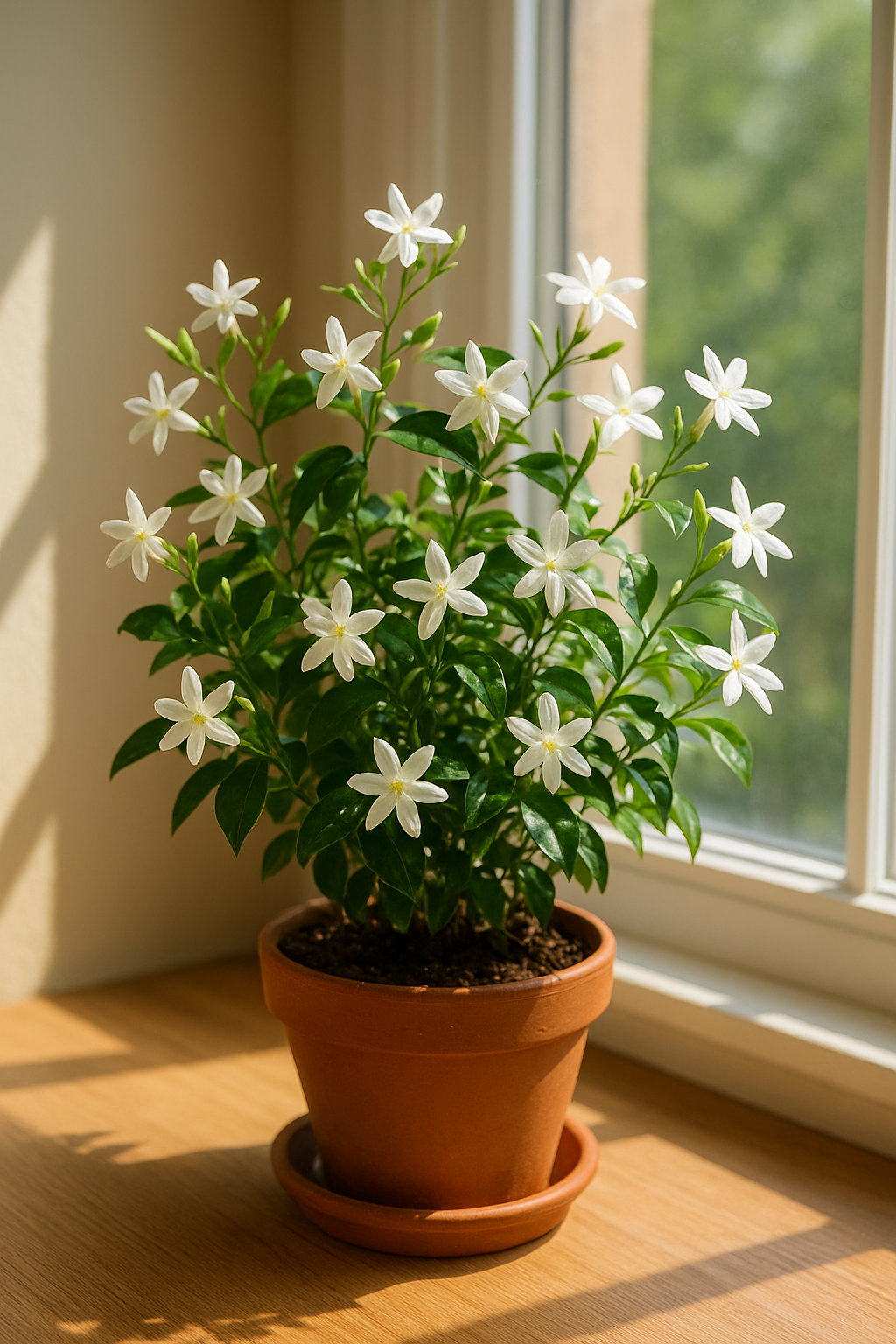
Jasmine flower indoor plants are popular for their heavenly scent, elegant white blooms, and air-purifying qualities. Whether you live in a small apartment or a large home, jasmine can easily fit into your indoor space. Many people love growing jasmine indoors because it fills the home with a sweet, natural fragrance that can instantly lift your mood. Jasmine is a low-maintenance plant once you understand its basic needs, making it perfect for beginners and expert gardeners alike. Its vines can be trained, shaped, and displayed beautifully, turning any corner into a peaceful and refreshing spot. With the right care, jasmine grows fast and blooms throughout the year, adding charm and freshness to your indoor environment.
About Jasmine Flower
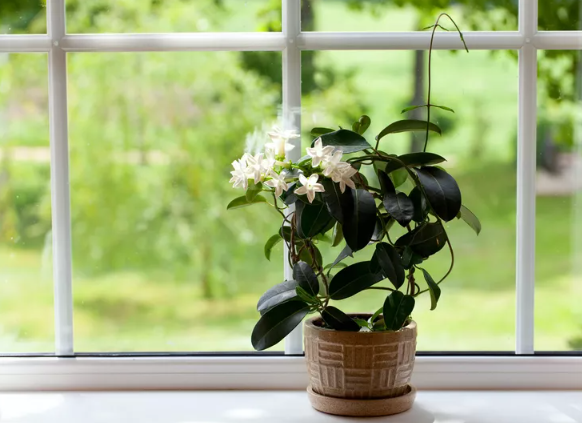
Jasmine is one of the most loved flowering plants in the world, known for its sweet, calming fragrance and delicate white or yellow blooms. Belonging to the Oleaceae family, jasmine includes over 200 species found in warm, tropical, and subtropical regions. The flowers typically bloom at night and release a strong, soothing scent often used in perfumes, essential oils, and teas. Jasmine symbolizes love, purity, beauty, and elegance in many cultures, making it a popular choice for home gardens and indoor plants. Easy to grow with proper care, jasmine adds natural charm, freshness, and fragrance to any space it decorate
Benefits of Growing Jasmine Indoors
Growing jasmine indoors comes with a wide range of amazing benefits. First, jasmine plants are natural air purifiers, removing toxins and improving overall indoor air quality. They release oxygen at night, making them ideal for bedrooms. Second, jasmine adds a soothing fragrance that creates a relaxing atmosphere. Many people use jasmine to reduce stress and promote better sleep. Third, jasmine plants are visually appealing. Their delicate flowers and glossy leaves brighten up any space, from living rooms to kitchens. They also require minimal space and can be grown in pots, hanging baskets, or decorative containers. If you’re looking for a plant that offers beauty, fragrance, and health benefits, jasmine is the perfect indoor plant.
Types of Jasmine Suitable for Indoor Growth
Several types of jasmine grow extremely well indoors.
- Arabian Jasmine (Jasminum Sambac) is one of the most popular varieties, loved for its strong fragrance and pure white flowers. It blooms throughout the year and is easy to maintain.
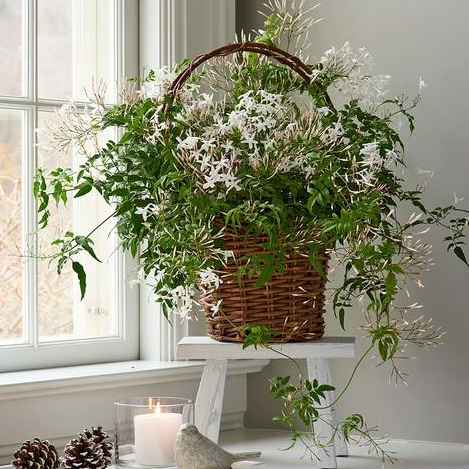
- White Jasmine (Jasminum Polyanthum) grows fast and produces clusters of pink-white flowers with a sweet scent. It is ideal for hanging pots or decorative trellises.
- Madagascar Jasmine, also known as Bridal Veil Jasmine, is another great choice. Although not a true jasmine, it offers similar beauty and fragrance and is perfect for indoor containers.
Choosing the right type ensures better growth, blooming, and overall plant health.
Best Conditions for Growing Jasmine Indoors
Jasmine thrives in specific indoor conditions. It prefers temperatures between 60°F and 75°F (15°C – 24°C), making it perfect for indoor environments. Maintaining humidity is important because jasmine loves slightly moist air. You can increase humidity using a humidifier or by placing a water tray near the plant. Jasmine also requires plenty of indirect sunlight. Place it near a bright window where it gets at least 4–6 hours of sunlight daily. good air circulation keeps the leaves fresh and prevents fungal issues. Be sure to avoid placing your plant near heaters, air conditioners, or cold drafts, as sudden temperature changes can stress the plant and reduce blooming.
Soil and Potting Requirements
Using the right soil mix is essential for a healthy jasmine plant. Jasmine prefers well-draining soil with a mix of peat, compost, and sand. This combination ensures good aeration and prevents root rot. Choose a pot with drainage holes so excess water can escape easily. Terracotta pots are excellent because they allow air to flow through the soil. Make sure the pot is big enough to encourage root development but not too large, as oversized pots retain excess moisture. Adding small stones or gravel at the bottom can improve drainage and support healthy root growth. Repotting every 1–2 years keeps your jasmine healthy and encourages new blooms.
Watering Guide for Indoor Jasmine
Watering jasmine properly is key to keeping it healthy. Jasmine loves moist soil but not soggy conditions. Water the plant when the top inch of soil feels dry. During summer, you may need to water more frequently, while winter requires much less. Overwatering can cause yellow leaves and root rot, so always check soil moisture before watering. Use room-temperature water to avoid shocking the roots. Mist the leaves regularly to maintain humidity and keep them fresh. For best results, use filtered or rainwater because jasmine can be sensitive to chemicals found in tap water.
Fertilizing Your Indoor Jasmine Plant
Fertilizing jasmine helps it grow faster, produce more leaves, and bloom throughout the year. Use a balanced liquid fertilizer once a month during the growing season (spring and summer). A fertilizer rich in phosphorus helps encourage more flowers. Avoid over-fertilizing because it can damage the plant. You can also use organic options like compost tea, fish emulsion, or seaweed extract for healthier soil. During winter, reduce fertilizing because the plant enters a resting phase. Following a regular feeding schedule ensures your jasmine stays green, strong, and full of blooms.
Pruning and Training Jasmine Indoors
Pruning jasmine is necessary to maintain shape and encourage fresh growth. Trim the plant after the blooming season to remove dead or weak stems. This helps the plant focus energy on producing new shoots and flowers. Jasmine vines grow quickly, so training them on a trellis or support structure is ideal. Use soft plant ties to gently guide the vines in your desired direction. Regular pruning also helps improve air circulation, preventing pests and diseases. A well-trained jasmine plant adds elegance and beauty to any room.
Common Problems & Solutions
Indoor jasmine plants can sometimes face issues, but they are easy to fix. Yellow leaves usually indicate overwatering or lack of nutrients. Adjust your watering schedule or add fertilizer. Pest attacks like aphids, spider mites, and whiteflies are common. You can use neem oil or a mild soap spray to remove pests. Root rot happens if the soil stays too wet for too long—repot the plant in fresh, well-draining soil. Most problems occur due to incorrect watering, poor lighting, or low humidity, so fixing these conditions usually solves the issue.
Propagation of Jasmine Indoor Plants
Propagation is a fun and easy way to grow new jasmine plants. The most common method is stem cuttings. Cut a healthy stem around 4–6 inches long and remove the lower leaves. Dip the cut end into rooting hormone and place it into moist soil. You can also propagate jasmine in water by placing the cutting in a jar until roots form. Once roots reach 1–2 inches, transfer the cutting into soil. Keeping the plant in a warm, humid environment helps it root faster. With proper care, your new jasmine plant will start growing in just a few weeks.
How to Make Jasmine Bloom Indoors
If your jasmine isn’t blooming, it may need more light. Place it near a bright window or use a grow light for additional support. Feeding the plant with a bloom-boosting fertilizer helps encourage flowering. Jasmine also needs cooler nighttime temperatures to stimulate bloom production. Keep the plant near a slightly cooler area during the night. Maintaining proper humidity and giving the plant enough rest in winter also boosts blooming in spring.
Jasmine Plant Care in Different Seasons
Seasonal care ensures your jasmine stays healthy all year. In summer, keep the soil moist and provide enough light. Mist the leaves regularly to maintain humidity. In winter, reduce watering and avoid cold drafts. During spring, trim the plant and start feeding for new growth. Autumn is a good time to repot and prepare the plant for winter. With small seasonal adjustments, your jasmine plant will thrive effortlessly.
Best Companion Plants for Jasmine Indoors
Some plants grow well with jasmine and help create a beautiful indoor display. Companion plants like peppermint, lavender, and ferns complement jasmine visually and aromatically. Avoid plants that require very dry soil, as jasmine prefers moisture. Grouping compatible plants helps maintain humidity and creates a lush indoor garden.
Indoor Decor Ideas with Jasmine Flowers
Jasmine plants can be used creatively to enhance your home décor. Place jasmine on a windowsill for natural light and beauty. Use hanging pots to style jasmine vines in balconies or living rooms. You can also create a “fragrance corner” by placing jasmine near your entryway or bedroom. Jasmine adds elegance and freshness wherever it’s placed.
Final Tips for Beginner Gardeners
If you’re growing jasmine indoors for the first time, start small. Choose a beginner-friendly variety like Arabian Jasmine. Keep a regular watering schedule and provide consistent sunlight. Avoid over-fertilizing and always use well-draining soil. Once you understand jasmine’s needs, caring for it becomes easy and rewarding.
Conclusion
Growing a jasmine flower indoor plant is one of the easiest ways to bring beauty, fragrance, and nature into your home. With the right care—proper watering, sunlight, soil, and pruning—your jasmine plant will reward you with nonstop blooms and a refreshing scent. Whether you’re a beginner or an experienced plant lover, jasmine is a fantastic addition to any indoor garden.
FAQs
1. Does jasmine grow well indoors?
Yes, jasmine grows extremely well indoors if you provide enough light, humidity, and proper care.
2. How often should I water my indoor jasmine?
Water when the top inch of the soil feels dry. Avoid overwatering to prevent root rot.
3. Why is my jasmine not blooming?
Lack of light, improper feeding, or incorrect temperatures can delay blooming.
4. What is the best jasmine variety for indoor growing?
Arabian Jasmine (Jasminum Sambac) is the easiest and most fragrant for indoor use.
5. Can jasmine purify indoor air?
Yes, jasmine purifies the air and releases oxygen at night, improving indoor air quality.