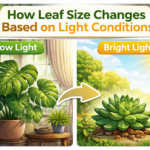

Leaf size is one of the most noticeable features of any plant, and it often changes depending on the amount of light the plant receives. As someone who enjoys observing plant growth, I’ve noticed that plants adapt their leaves to survive in different lighting conditions. This natural adjustment helps them capture the right amount of sunlight needed for photosynthesis. In low-light environments, many plants grow larger leaves to absorb as much light as possible.
On the other hand, in bright sunlight, plants often produce smaller or thicker leaves to prevent excessive water loss and damage from intense rays. These changes are part of a plant’s survival strategy and are influenced by environmental factors such as light intensity, humidity, and temperature. Understanding how leaf size responds to light conditions can help gardeners and plant lovers provide better care for their plants. By observing leaf growth patterns, I can often tell whether a plant is receiving too much or too little light, making it easier to adjust its placement for healthier growth.
Why Light Affects Leaf Size?
Light plays a critical role in plant development because it directly influences photosynthesis, the process plants use to produce energy. When plants grow in shaded or low-light environments, they often develop larger leaves with thinner structures. I’ve observed that these larger leaves increase the surface area available to capture limited sunlight. This helps the plant maximize energy production even when light is scarce.
In contrast, plants growing in bright sunlight typically produce smaller, thicker leaves. These leaves reduce water loss and protect plant tissues from intense sunlight and heat. Smaller leaves also help limit excessive transpiration, which can lead to dehydration.
Several key factors explain why leaf size changes with light conditions:
- Light intensity: Low light encourages larger leaves, while high light promotes smaller leaves.
- Energy efficiency: Plants adapt leaf size to capture optimal sunlight.
- Water conservation: Smaller leaves help reduce moisture loss in strong light.
- Heat protection: Thick leaves prevent damage from excessive sunlight.
By understanding these natural adjustments, I can better position plants indoors or outdoors to match their preferred light conditions.
Large Leaves in Low-Light Conditions
Plants growing in shaded environments often develop larger leaves as a survival strategy. I’ve seen this especially in indoor plants placed far from windows or under tree canopies outdoors. Larger leaves help capture as much available light as possible, allowing the plant to continue photosynthesis even in dim conditions.
These leaves are usually thinner and softer compared to sun-grown leaves. Their structure allows light to penetrate more easily into the leaf tissue, improving energy absorption. While this adaptation helps plants survive, it can also make them more delicate.
Characteristics of large leaves in low light include:
- Greater surface area to absorb limited sunlight
- Thinner leaf structure for efficient light penetration
- Darker green color due to higher chlorophyll concentration
- Slower but steady growth patterns
Many tropical houseplants naturally grow in forest understories, where light is filtered through taller trees. Because of this, they are already adapted to producing larger leaves in lower light environments. When I move such plants into brighter areas, I often notice the new leaves becoming smaller and thicker over time.
Smaller Leaves in Bright Light
In bright or direct sunlight, plants tend to produce smaller and sometimes thicker leaves. I’ve observed this change in outdoor plants exposed to strong sunlight for many hours each day. Smaller leaves reduce the surface area exposed to intense light, helping prevent overheating and excessive water loss.
Plants in bright environments also develop stronger leaf tissues. These thicker leaves contain protective structures that help them tolerate higher temperatures and intense light levels.
Key features of smaller leaves in bright light include:
- Reduced surface area to limit water loss
- Thicker leaf tissue for protection against heat
- Lighter green color due to balanced chlorophyll levels
- Faster photosynthesis in optimal sunlight
This adaptation allows plants to survive in open environments such as deserts, grasslands, or sunny gardens. When caring for plants at home, I try to ensure that sun-loving species receive enough light so they can develop strong, healthy leaves rather than weak, oversized ones.
Other Factors That Influence Leaf Size
Although light is a major factor affecting leaf size, several other environmental conditions also play a role. From my experience with plant care, I’ve noticed that leaf development often results from a combination of multiple factors rather than light alone.
Important influences include:
- Water availability: Adequate water supports larger leaf growth.
- Humidity levels: Higher humidity encourages softer and larger leaves.
- Temperature: Warm conditions often promote faster leaf expansion.
- Nutrient availability: Balanced nutrients help plants produce healthy foliage.
- Plant species: Some plants naturally have larger or smaller leaves regardless of light.
For example, a plant in low light but poor soil may still produce small leaves due to nutrient limitations. This is why I always consider the overall environment when evaluating plant health. Balanced care ensures plants can adapt properly to their surroundings.
How Gardeners Can Use This Knowledge?
Understanding how leaf size responds to light conditions helps gardeners make better decisions about plant placement and care. I often use leaf size as a visual indicator to determine whether a plant is receiving the right amount of light.
Practical tips include:
- Observe leaf changes: Larger new leaves may signal insufficient light.
- Adjust plant position: Move plants closer to windows if leaves become oversized and weak.
- Provide filtered light: Some plants prefer bright but indirect sunlight.
- Rotate indoor plants: This ensures even light exposure and balanced growth.
By paying attention to leaf size and structure, I can quickly identify lighting problems and correct them before they affect the plant’s health.
Conclusion
Leaf size changes are a natural adaptation that helps plants survive under different lighting conditions. When light is limited, plants often grow larger leaves to capture more sunlight. In bright environments, they typically develop smaller and thicker leaves to conserve water and protect themselves from heat. I find that observing these changes offers valuable insight into a plant’s needs and overall health. While light is the primary factor influencing leaf size, other elements such as water, nutrients, and temperature also play important roles. By understanding these relationships, gardeners and plant enthusiasts can create better growing conditions and help their plants thrive in both indoor and outdoor environments.
FAQ
1. Why do plants grow larger leaves in shade?
Plants grow larger leaves in shade to increase their surface area, allowing them to capture more available light for photosynthesis.
2. Do all plants change leaf size based on light?
Most plants show some level of adjustment, but the degree varies depending on the species.
3. Can too much light damage leaves?
Yes, excessive light can cause leaf burn, dryness, and reduced growth.
4. Will leaf size change immediately after moving a plant?
No. Usually only new leaves adapt to the new light conditions, while older leaves remain the same.
5. How can I tell if my plant needs more light?
If new leaves become unusually large, thin, or weak, it may indicate that the plant needs more light.