Indoor plants are like silent roommates. They don’t complain loudly, but when something’s wrong, they show it through yellow leaves, drooping stems, or slow growth. And guess what? In most cases, the real problem is hiding underground. Yes — the roots.
At My Plants Valley, we believe healthy roots are the secret to thriving indoor plants. If the roots suffer, the entire plant struggles. So let’s uncover the most common root problems in indoor plants and explore simple, affordable home remedies you can use right away.
Why Healthy Roots Are the Foundation of Indoor Plants
Roots are the lifeline of every plant. They absorb water, nutrients, and oxygen from the soil and transport them to the rest of the plant. Think of roots as a delivery system — if deliveries stop, the plant starves.
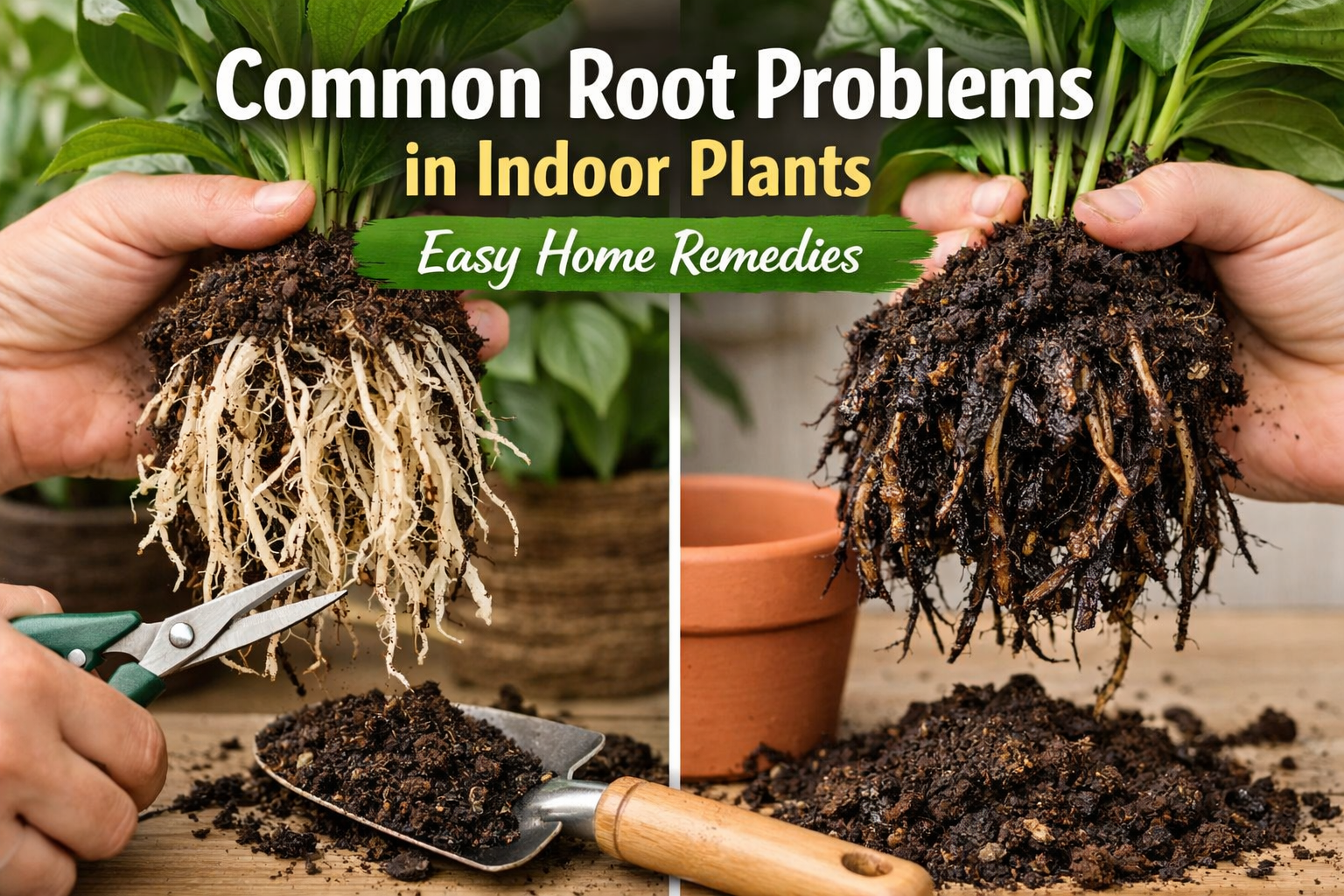
When roots are healthy, they look firm and white or light tan. But when something goes wrong, the signs show above the soil. You might notice:
- Yellowing leaves
- Drooping stems
- Slow or stunted growth
- Foul smell from soil
- Mushy plant base
Many plant owners treat leaf symptoms without checking the roots. That’s like repainting a cracked wall without fixing the foundation. If you want long-term plant health, always start below the surface. Strong roots mean strong plants — it’s that simple.
Root Rot – The Silent Killer of Indoor Plants
Root rot is one of the most common and dangerous root problems. It usually happens when soil stays wet for too long. Roots need oxygen, and when they sit in waterlogged soil, they suffocate and decay.
Common causes include:
- Overwatering
- Poor drainage
- Pots without drainage holes
- Heavy, compact soil
Symptoms of root rot:
- Soft, black or brown roots
- Yellow leaves despite moist soil
- Mushy stems
- Bad smell from the pot
Simple Home Remedies for Root Rot
- Remove the plant from its pot immediately.
- Trim all damaged roots with clean scissors.
- Rinse healthy roots gently with water.
- Let them dry for a few hours.
- Repot in fresh, well-draining soil.
Act fast. Early treatment can save your plant completely.
Overwatering and Waterlogged Soil Problems
Overwatering is the number one mistake plant lovers make. We water out of love — but too much love can drown your plant.
Roots need a balance of moisture and air. When soil stays constantly wet, oxygen levels drop. Without oxygen, roots weaken and become vulnerable to rot and fungi.
Signs of overwatering include:
- Droopy but soft leaves
- Yellow leaves
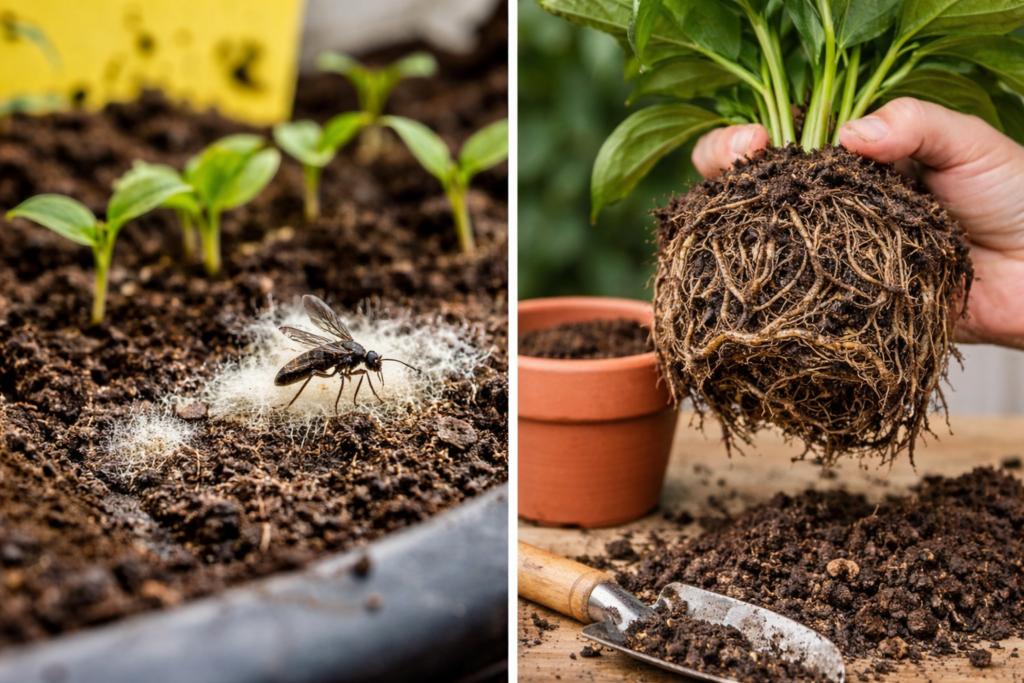
- Mold on soil surface
- Fungus gnats flying around
How to Fix Overwatering at Home
- Always check soil before watering (insert finger 1–2 inches deep).
- Use pots with proper drainage holes.
- Mix perlite or sand into soil.
- Empty excess water from saucers.
Watering less frequently but deeply is better than frequent shallow watering.
Underwatering and Dry Root Stress
While overwatering is common, underwatering can also damage roots. When soil becomes too dry, roots shrink and struggle to absorb nutrients.
Symptoms of underwatering:
- Dry, crispy leaves
- Soil pulling away from pot edges
- Slow growth
- Lightweight pot
If left untreated, roots become brittle and weak.
Easy Home Solution for Dry Roots
- Place the pot in a bucket of water for 20–30 minutes.
- Allow soil to absorb water from the bottom.
- Let excess water drain fully.
- Resume consistent watering schedule.
Plants thrive on consistency. Avoid extreme dry-wet cycles.
Fungal Infections in Indoor Plant Roots
Fungi love moist, poorly ventilated soil. When roots stay wet for too long, fungal spores multiply and attack weak roots.
Common signs include:
- Wilting despite moist soil
- Brown or slimy roots
- Slow recovery after watering
Natural Antifungal Home Remedies
- Sprinkle cinnamon powder on soil surface.
- Use diluted hydrogen peroxide (1:3 ratio with water).
- Improve air circulation around plants.
- Reduce watering frequency.
Cinnamon works as a natural antifungal agent. It’s simple, affordable, and surprisingly effective.
Root-Bound Plants and Restricted Growth
Have you ever seen roots growing out of drainage holes? That’s a root-bound plant. When roots outgrow their container, they wrap tightly around themselves.
Signs of a root-bound plant:
- Roots circling the pot
- Soil dries too quickly
- Slowed growth
- Water runs straight through soil
How to Fix Root-Bound Plants
- Repot into a slightly larger container.
- Gently loosen the root ball.
- Trim excessively long roots if needed.
- Add fresh nutrient-rich soil.
Giving roots more space allows better water and nutrient absorption.
Pest Attacks on Plant Roots
Some pests attack roots instead of leaves. These pests live in soil and feed on roots directly.
Common root pests include:
- Fungus gnat larvae
- Root aphids
- Soil mites
Symptoms:
- Weak growth
- Wilting
- Small flying insects near soil
Safe Home Remedies for Root Pests
- Let soil dry between waterings.
- Use neem oil solution in soil.
- Place sticky traps for adult gnats.
- Replace heavily infested soil.
Early detection makes treatment easier.
Poor Drainage and Compact Soil Issues
Soil quality plays a huge role in root health. Heavy, compact soil traps water and blocks airflow.
Problems caused by poor soil:
- Root suffocation
- Fungal growth
- Nutrient imbalance
- Slow growth
DIY Soil Improvement Tips
- Add perlite for aeration.
- Mix coco coir for better drainage.
- Avoid using garden soil indoors.
- Repot every 1–2 years.
Well-draining soil keeps roots breathing and thriving.
Preventing Root Problems in Indoor Plants
Prevention is easier than cure. Healthy plant care habits reduce root problems significantly.
Smart Root Care Tips
- Water only when soil feels dry.
- Use breathable pots (terracotta works well).
- Ensure drainage holes are clear.
- Adjust watering during winter.
- Avoid oversized pots.
Routine checks can save you from major plant disasters. A little attention goes a long way.
Conclusion
Root problems in indoor plants are common, but they’re not permanent. From root rot and fungal infections to pest attacks and poor drainage, most issues can be solved with simple home remedies.
The key is awareness. Don’t just focus on leaves — always check what’s happening below the soil. Healthy roots are the foundation of every thriving plant.
At My Plants Valley, we encourage simple, practical plant care that anyone can follow. With the right knowledge and small daily habits, your indoor plants can stay lush, vibrant, and healthy for years.
FAQs
1. How do I know if my plant has root rot?
If the roots are black, mushy, and smell bad, your plant likely has root rot.
2. Can a plant recover from severe root damage?
Yes, if healthy roots remain and you act quickly by repotting in fresh soil.
3. Is cinnamon safe for all indoor plants?
Yes, cinnamon is generally safe and acts as a natural antifungal treatment.
4. How often should I repot indoor plants?
Most indoor plants benefit from repotting every 1–2 years.
5. What is the best soil mix for indoor plants?
A well-draining potting mix with perlite or coco coir works best for most varieties.