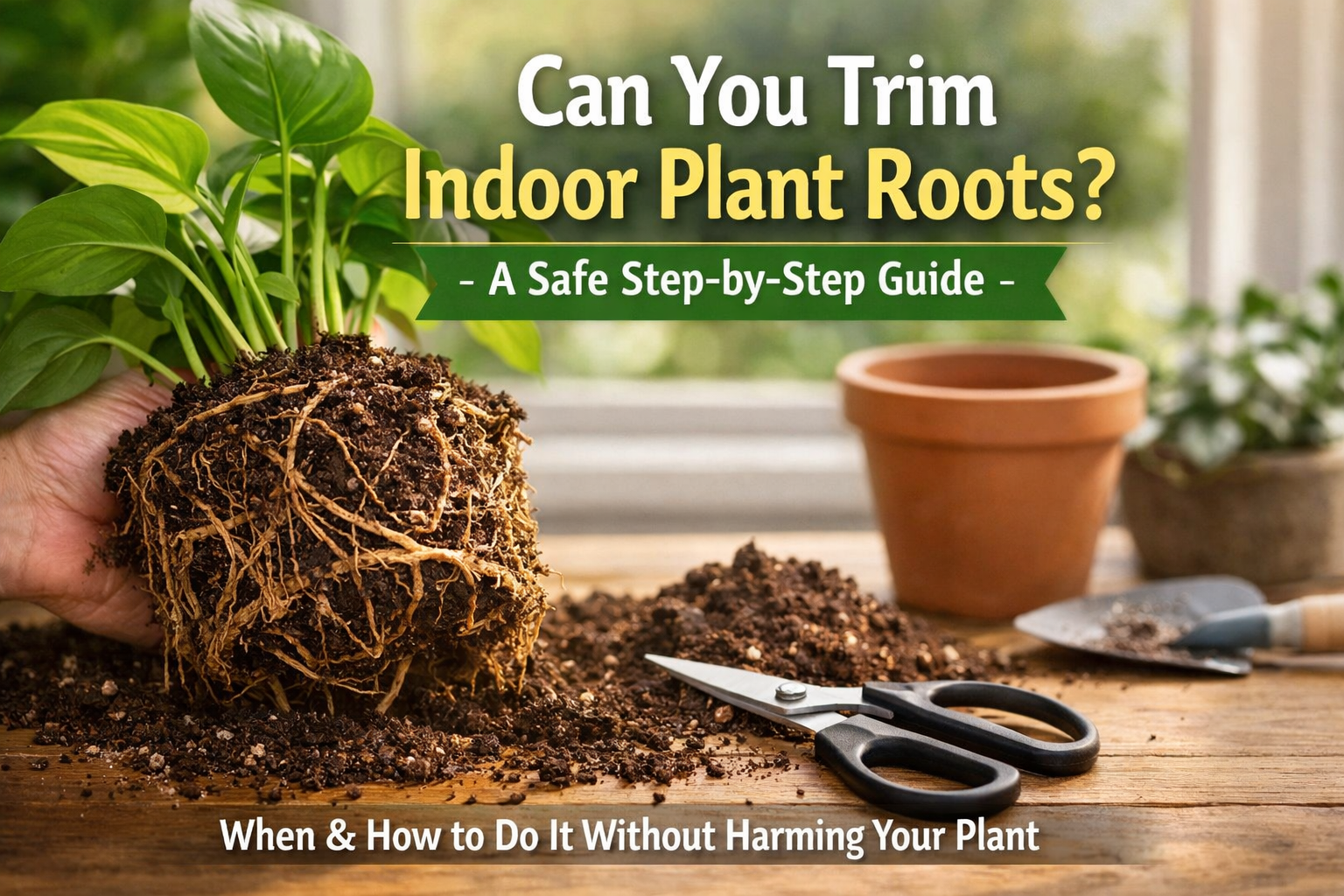
Indoor plants bring life, freshness, and calm into our homes—but their health starts below the soil. While we often focus on leaves and stems, roots do the real work behind the scenes. Over time, potted plants can become root-bound, meaning their roots outgrow the container and begin circling tightly. When that happens, growth slows and problems begin. So, can you trim indoor plant roots safely? Yes, you can—if you do it correctly and at the right time.
In this guide from My Plants Valley, you’ll learn when root trimming is necessary and how to do it without harming your plant.
Understanding Indoor Plant Root Systems
Indoor plant roots are like the hidden engine of your green friends. You don’t see them, but they do all the heavy lifting. Think of roots as a plant’s underground network—absorbing water, collecting nutrients, and anchoring the plant firmly in place. Without healthy roots, even the prettiest leaves won’t survive for long.
Roots grow continuously. In pots, however, they don’t have unlimited space. Over time, they circle around the container, creating what gardeners call “root-bound.” When this happens, growth slows, leaves may yellow, and water drains too quickly or too slowly.
At My Plants Valley, we often remind plant lovers that healthy roots equal healthy plants. If the roots are cramped or damaged, the plant struggles silently. So yes, understanding roots is the first step before even thinking about trimming them. Would you cut your hair without checking its condition first? The same logic applies here.
Can You Trim Indoor Plant Roots?

Yes, you absolutely can trim indoor plant roots—but only when it’s necessary and done correctly. Root pruning is not plant torture; it’s actually a helpful maintenance technique. When done properly, it can rejuvenate growth and prevent your plant from becoming root-bound.
However, not every plant needs root trimming. Some houseplants thrive in slightly tight spaces. Others grow aggressively and require occasional pruning to stay manageable. The key is observation. Is your plant struggling? Are roots circling the pot tightly? Then trimming might be the right move.
Controlled root trimming helps maintain plant size, encourages fresh root development, and improves nutrient absorption. It’s similar to pruning branches—removing the old to make space for the new. But remember, moderation is everything. Cut too much, and you risk shocking the plant.
So yes, trimming is safe—but only if you know when and how to do it properly.
Signs Your Indoor Plant Needs Root Trimming
How do you know it’s time? Plants don’t speak—but they show signs. One of the most obvious indicators is roots growing out of the drainage holes. That’s your plant waving a little white flag saying, “I need more space!”
Another sign is rapid drying of soil. If water runs straight through the pot without soaking in, it could mean the roots have taken over most of the space. You might also notice slowed growth, yellowing leaves, or wilting despite regular watering.
When you gently remove the plant from its pot and see tightly coiled roots forming a thick circle around the soil, that’s root-bound condition. At this stage, trimming or repotting becomes necessary.
Ignoring these symptoms can stunt your plant’s growth. Think of it like wearing shoes two sizes too small. Eventually, something has to give.
Best Time to Trim Indoor Plant Roots
Timing matters more than you think. The best time to trim indoor plant roots is during the active growing season—typically spring or early summer. During this period, plants recover faster and produce new roots quickly.
Avoid root pruning during winter dormancy. Plants rest during colder months, and trimming roots then can cause unnecessary stress. Recovery becomes slower, and the risk of shock increases.
Root trimming is often done during repotting. If you’re already changing the pot or refreshing soil, it’s the perfect opportunity. However, you can trim roots and place the plant back in the same container if you want to control its size.
At My Plants Valley, we recommend observing growth patterns. If your plant is actively producing new leaves, that’s your green light. Choose the right season, and your plant will thank you with stronger, healthier growth.
Tools You Need for Safe Root Pruning
You wouldn’t perform surgery with dull scissors, right? The same rule applies here. Always use clean, sharp pruning shears or scissors. A small gardening knife can also work for thicker roots.
Sanitization is crucial. Wipe your tools with rubbing alcohol before and after trimming. This prevents the spread of diseases and bacteria. It may sound excessive, but plants can catch infections too.
You’ll also need fresh potting soil, gloves, and possibly a slightly larger pot if repotting. Make sure the container has proper drainage holes to avoid waterlogging.
Clean cuts heal faster. Jagged or torn roots can invite rot and fungal issues. So invest in proper tools—it’s a small effort that makes a big difference.
Step-by-Step Guide to Trimming Indoor Plant Roots
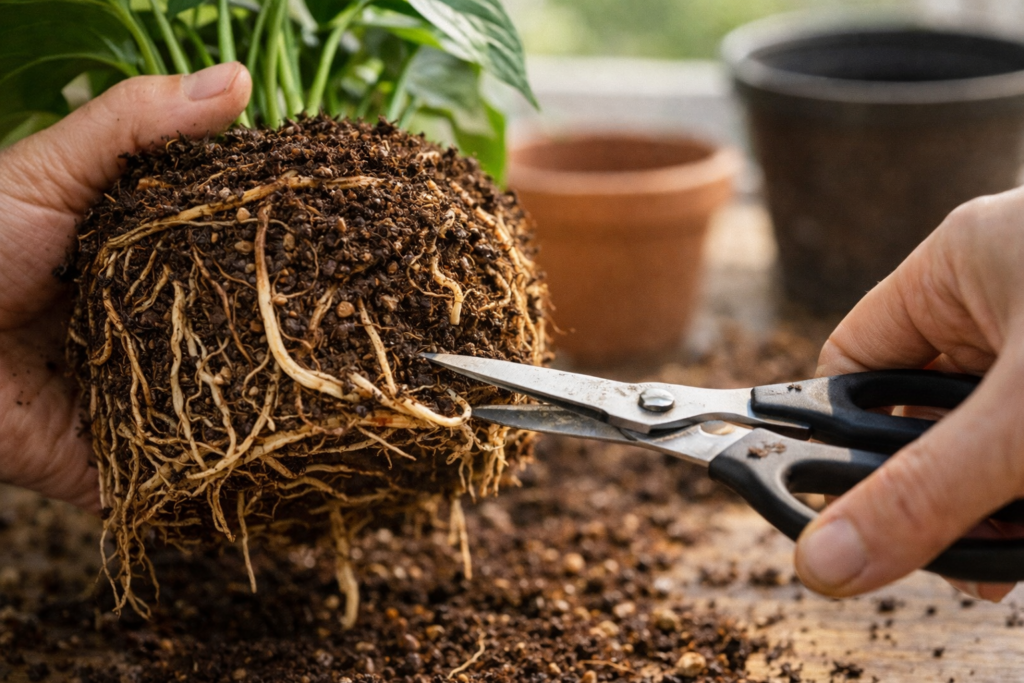
Start by gently removing the plant from its pot. Loosen the soil around the roots carefully. Shake off excess soil so you can clearly see the root structure.
Next, identify damaged, dark, mushy, or overly long circling roots. These are the ones you can safely trim. Cut about 20–30% of the root mass at most. Never remove more than one-third at a time.
Make clean cuts and avoid tearing. If the root ball is extremely dense, lightly loosen it with your fingers before trimming. Once done, place the plant in fresh soil and press gently to secure it.
Water lightly after repotting and avoid heavy fertilization for a few weeks. Your plant needs time to adjust.
Simple steps. Careful cuts. Big results.
Common Mistakes to Avoid When Trimming Roots
Over-pruning is the biggest mistake. Cutting too many roots at once can shock the plant and stunt growth. Less is always more.
Another mistake? Trimming healthy roots unnecessarily. Only remove damaged or excessive roots. Healthy white roots are beneficial—don’t cut them without reason.
Avoid trimming during extreme heat or winter. Also, never skip tool sanitization. Disease spreads faster than you think.
Patience is key. Root trimming is maintenance, not a race.
Aftercare Tips for Root-Pruned Indoor Plants
After trimming, your plant needs gentle care. Place it in indirect sunlight for a few days. Avoid direct harsh light, as the plant is already stressed.
Water moderately—not too much, not too little. Overwatering freshly pruned roots can cause rot. Let the soil dry slightly before watering again.
Hold off on fertilizing for at least two to three weeks. Fresh roots are sensitive. Give them time to establish before feeding.
Think of it like recovery after a haircut—you don’t immediately apply chemicals. Give your plant breathing space.
Plants That Respond Well to Root Pruning
Fast-growing houseplants like pothos, spider plants, and rubber plants respond well to root pruning. They bounce back quickly and often grow stronger.
Bonsai plants especially require regular root trimming to maintain shape and size. It’s part of their structured care routine.
At My Plants Valley, we’ve seen monsteras and peace lilies benefit greatly from controlled root pruning when root-bound.
However, always research your specific plant variety before trimming.
When You Should NOT Trim Roots
Avoid trimming newly repotted plants. They’re already adjusting. Adding more stress can cause decline.
Also, don’t trim roots of weak, diseased, or severely dehydrated plants. Fix the health issue first.
If the plant is flowering heavily, wait until blooming finishes. Root pruning during flowering can interrupt the cycle.
Timing and plant condition matter greatly.
Root Pruning vs Repotting – What’s the Difference?
Repotting means moving your plant to a larger container. Root pruning means trimming roots to maintain size, sometimes placing it back in the same pot.
If you want bigger growth, repot. If you want size control, prune roots.
Both methods improve health when done correctly. Choose based on your space and plant goals.
How Root Trimming Improves Indoor Plant Growth
Root trimming stimulates new root growth. Fresh roots absorb nutrients more efficiently. This leads to stronger leaves and healthier stems.
It also prevents overcrowding, improves drainage, and reduces root rot risks.
Think of it as resetting the system—clearing clutter to make room for growth.
Expert Tips from My Plants Valley
Always inspect roots annually. Prevention is easier than correction.
Use high-quality soil with good aeration. Compact soil leads to root stress.
Keep a plant care schedule. Regular observation prevents emergencies.
At My Plants Valley, we believe mindful care creates thriving indoor jungles.
Conclusion
So, can you trim indoor plant roots? Absolutely—but with care, timing, and proper technique. Root pruning isn’t harmful when done correctly. In fact, it can rejuvenate growth, prevent root-bound stress, and keep your indoor plants thriving for years.
Remember, plants are living organisms. Treat them gently, observe their needs, and respond thoughtfully. With the right approach, trimming roots becomes a powerful tool in your plant-care routine.
Healthy roots. Healthy plants. Happy home.
FAQs
1. How often should I trim indoor plant roots?
Usually once every 1–2 years, depending on growth rate and pot size.
2. Can root trimming kill my plant?
Yes, if overdone. Limit trimming to 20–30% of the root mass.
3. Should I fertilize after root pruning?
Wait 2–3 weeks before applying fertilizer.
4. Is root pruning better than repotting?
It depends. Prune for size control; repot for bigger growth.5. What happens if I don’t trim root-bound plants?
Growth slows, leaves yellow, and water absorption becomes inefficient.