
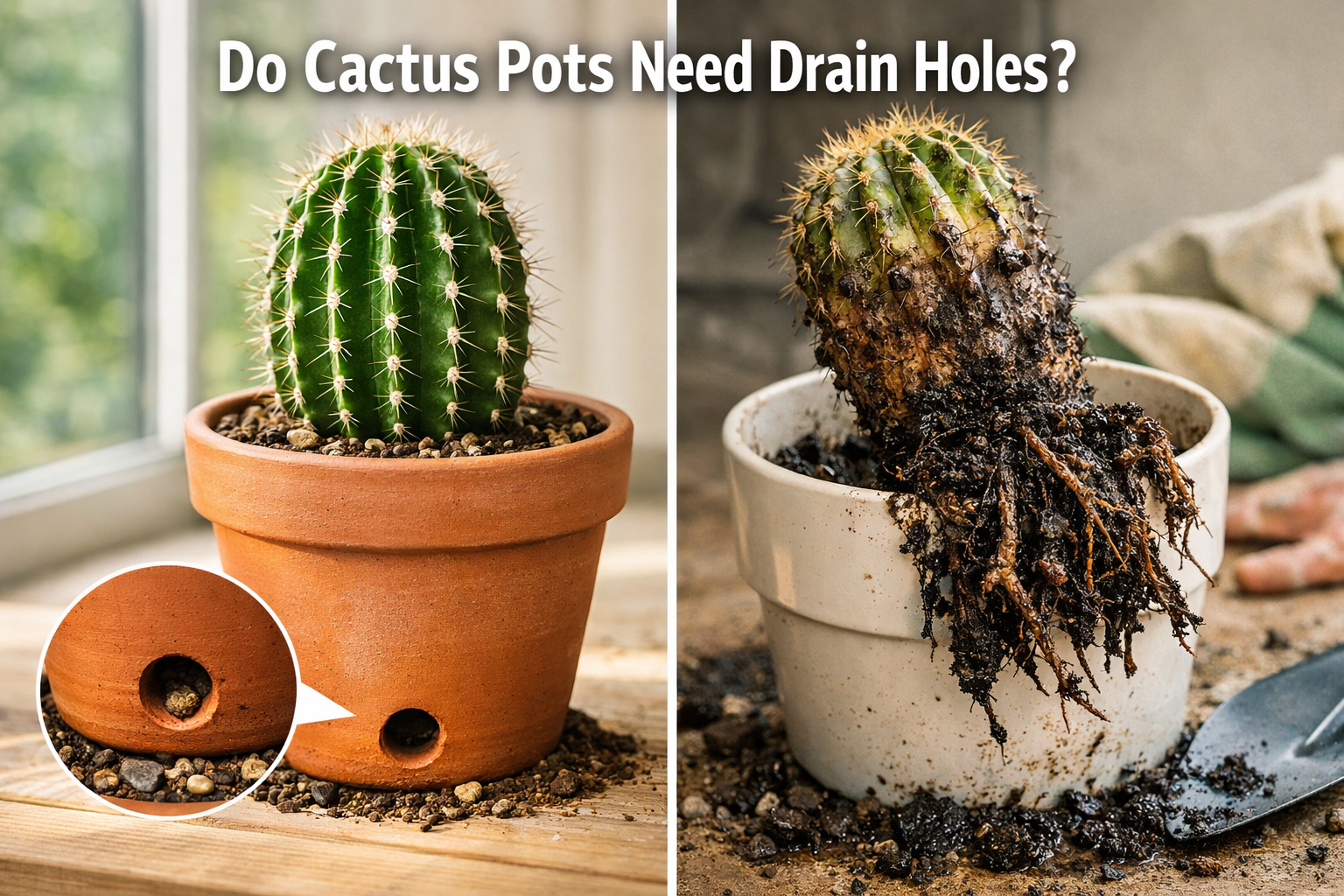
If you’ve ever stood in a garden store holding a cute cactus pot and wondered, “Do cactus pots need drain holes?”—you’re not alone. I’ve asked that exact question myself. Short answer? Yes, most of the time, cactus pots absolutely need drain holes.
Long answer? Well, that’s where things get interesting. Drain holes aren’t just optional design features; they’re a survival tool for cactus plants. Without proper drainage, water sits in the soil like a bad houseguest who refuses to leave. And cactus roots? They hate wet feet. In this article, I’ll break everything down in plain English—no plant science degree required. We’ll talk about why drainage matters, when you might bend the rules, and how to keep your cactus happy, healthy, and very much alive.
Understanding Natural Cactus Habitats
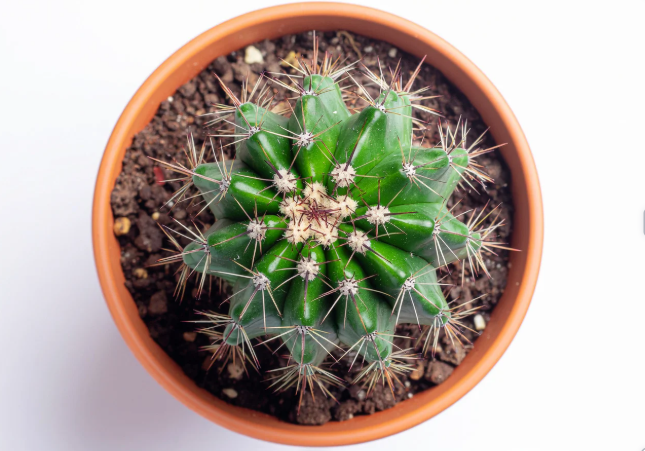
To really understand cactus care, I like to think about where cacti come from. In nature, cacti grow in deserts and dry regions where rain is rare but intense. When it does rain, water drains away fast through sandy, gritty soil. There’s no standing water, no soggy ground, and definitely no trapped moisture around the roots.
This natural setup is exactly why cactus roots evolved to absorb water quickly and then dry out just as fast. When we place a cactus in a pot without drain holes, we’re basically flipping its natural environment upside down. The soil stays wet, airflow is restricted, and roots start to suffer. Drain holes mimic desert conditions by letting excess water escape. Think of them as a shortcut to nature—small holes with a big impact.
Why Drainage Is Critical for Cactus Plants
Drainage is the backbone of cactus health. When you water a cactus, the soil should absorb moisture briefly and then dry out. Drain holes make this possible by allowing extra water to exit the pot instead of pooling at the bottom. Without drainage, water collects, soil compacts, and oxygen disappears. Roots need oxygen just as much as they need water. Poor drainage suffocates roots, weakens the plant, and invites fungal diseases. I’ve seen healthy-looking cacti collapse seemingly overnight, and nine times out of ten, bad drainage was the culprit. A pot with proper drainage keeps moisture levels balanced, prevents root rot, and supports long-term growth. Simply put, no drainage equals no margin for error—especially for beginners.
What Happens Without Drain Holes
When a cactus pot has no drain holes, trouble usually starts quietly. Water sits at the bottom, the soil stays wet longer than it should, and roots begin to rot from the inside out. Root rot isn’t dramatic at first—you won’t see it right away. But underneath the soil, roots turn brown, mushy, and useless. Eventually, the cactus softens, discolors, or collapses. By the time you notice, saving the plant can be tough. Overwatering is already the #1 killer of cacti, and pots without drainage make overwatering almost unavoidable. Even if you water carefully, evaporation alone often isn’t enough. Drain holes act like a safety valve, releasing excess water before damage begins.
Do All Cactus Pots Need Drain Holes?
Here’s where things get nuanced. While most cactus pots should have drain holes, there are a few controlled situations where you can get away without them. Indoor decorative pots, for example, can work if you’re extremely careful with watering. That said, I always recommend using a plastic nursery pot with drain holes inside a decorative outer pot. This setup gives you the best of both worlds—style and safety. For outdoor cacti, drain holes are non-negotiable. Rain, humidity, and unpredictable weather make proper drainage essential. In general, if you’re asking whether your cactus pot needs a drain hole, the safest answer is yes.
Exceptions to the Rule
Yes, exceptions exist—but they’re for confident plant parents only. Some experienced growers use pots without drainage by controlling water down to the last drop. This often involves:
- Measuring water precisely
- Using ultra-fast-draining soil
- Allowing extended dry periods
- Monitoring root health closely
This method leaves zero room for mistakes. One extra splash of water can cause long-term damage. For beginners or busy plant owners, this approach is risky. I personally don’t recommend it unless you truly know what you’re doing. Drain holes make cactus care forgiving. Without them, every watering feels like defusing a bomb—one wrong move and boom.
Best Pot Types for Cactus Plants
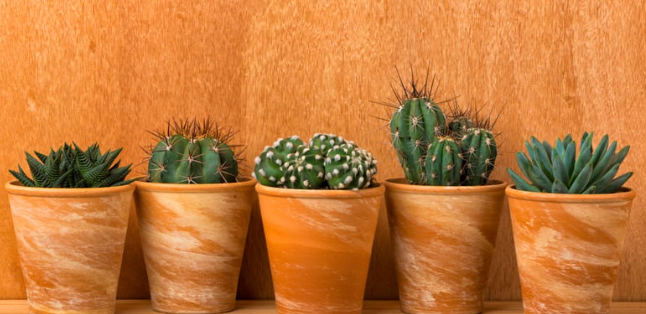
Not all pots are created equal. The best pots for cacti support airflow, evaporation, and drainage. Terracotta pots are my top pick because they’re porous and help soil dry faster. Ceramic pots can work too, as long as they have drain holes. Plastic pots retain moisture longer, which isn’t ideal but can still work with proper drainage and soil. Metal and glass containers? Hard pass. They trap moisture and heat, creating a stressful environment for cactus roots. When choosing a pot, I always ask myself one question: Will this help the soil dry out efficiently? If the answer is no, I keep shopping.
Terracotta vs Plastic Pots
Terracotta and plastic are the two most common cactus pot materials, and each has pros and cons. Terracotta is breathable, allows moisture to evaporate, and reduces overwatering risks. The downside? It dries quickly and may require more frequent watering. Plastic pots retain moisture longer and are lightweight and affordable, but they increase the risk of soggy soil. For beginners, terracotta is forgiving and beginner-friendly. Plastic works better for hot climates where soil dries too fast. No matter the material, drainage holes remain essential. Material can help—but holes do the heavy lifting.
How Drain Holes Prevent Root Rot
Drain holes prevent root rot by managing moisture and airflow. When water drains out, fresh air enters the soil, supplying oxygen to the roots. This oxygen keeps roots firm, white, and functional. Without airflow, roots suffocate and decay. Drain holes also prevent salt buildup from fertilizers, which can damage roots over time. Every time excess water escapes, it carries unwanted minerals with it. That’s a win-win. Healthy roots equal healthy growth, vibrant color, and stronger resistance to pests and disease.
Signs Your Cactus Lacks Proper Drainage
Your cactus will tell you when drainage is a problem—if you know what to look for. Common signs include:
- Soft or mushy stems
- Yellowing or browning
- Soil that stays wet for days
- Mold or fungus on soil surface
- Foul smell from the pot
If you notice any of these, check the pot immediately. Drainage issues escalate fast, but early action can save your plant. Repotting into a pot with proper drain holes is often the best solution.
Can You Use Pots Without Drain Holes?
Yes, but only with safeguards. The safest method is double potting—placing the cactus in a draining inner pot and setting it inside a decorative outer container. This allows excess water to escape while keeping your décor intact. Another option is drilling drain holes yourself if the material allows it. Avoid the myth of adding rocks at the bottom; it doesn’t improve drainage and can actually make things worse. Drain holes beat gimmicks every time.
How to Modify a Pot Without Drain Holes
If you’re attached to a pot without drainage, you can modify it. Ceramic and terracotta pots can often be drilled using a masonry bit. Go slow, keep the surface wet, and wear safety gear. Plastic pots are even easier to modify. Once you add a hole, the pot becomes cactus-friendly instantly. This small DIY step can dramatically improve plant health and extend your cactus’s life.
Best Soil Mix to Support Drainage
Even with drain holes, soil choice matters. Cactus soil should be loose, gritty, and fast-draining. A good mix includes:
- Coarse sand or perlite
- Pumice or gravel
- Minimal organic matter
Avoid regular potting soil—it holds too much moisture. Proper soil works hand-in-hand with drain holes to create the ideal environment. Think of drainage as a team effort: pot + holes + soil.
How Often Should You Water a Cactus?
Drain holes don’t mean you can water more often. They simply protect against excess. Most cacti prefer a soak-and-dry approach—water thoroughly, then wait until the soil is completely dry. Frequency depends on season, light, and temperature. Drain holes make it easier to water deeply without fear. Without them, every watering becomes risky.
Indoor Cactus Care Tips
Indoor cacti rely heavily on proper drainage because airflow is limited. Place them near bright light, rotate occasionally, and never let water sit in a saucer. Drain holes ensure any extra water escapes instead of lingering. Indoors, drainage isn’t optional—it’s essential insurance.
Outdoor Cactus and Drainage Needs
Outdoor cacti face rain, humidity, and temperature changes. Drain holes are critical here. Without them, a single storm can drown your plant. Elevate pots slightly and use fast-draining soil to help water move out quickly. Outdoors, drainage equals survival.
Common Mistakes Beginners Make
The most common mistake? Choosing pots based on looks alone. Other mistakes include:
- Overwatering
- Using soil without drainage support
- Ignoring early warning signs
Drain holes eliminate many beginner errors automatically. They’re a simple fix with massive benefits.
Expert Tips for Healthy Cactus Growth
Here’s what experienced growers swear by:
- Always choose pots with drain holes
- Use breathable materials
- Water less, not more
- Repot when soil compacts
These habits create strong roots and long-lasting plants.
Conclusion
Cactus care doesn’t have to be complicated, but it does require respecting the plant’s natural needs. Drain holes are one of the simplest and most effective ways to keep your cactus healthy. They mimic desert conditions, protect roots, and give you room for small mistakes. Whether you’re a beginner or a seasoned plant lover, choosing pots with proper drainage is a smart, long-term decision. When in doubt, remember this rule: dry roots are happy roots.
FAQs
1. Can a cactus survive without drain holes?
Yes, but only short-term and with extreme care.
2. Are rocks at the bottom a good substitute for drain holes?
No, they often worsen drainage issues.
3. What’s the best pot material for cacti?
Terracotta with drainage holes is ideal.
4. How many drain holes should a cactus pot have?
At least one large hole or multiple small ones.
5. Should indoor cactus pots always have drainage?
Yes, especially for long-term health.